Showing posts with label 1990s. Show all posts

Sunday, 7 December 2014

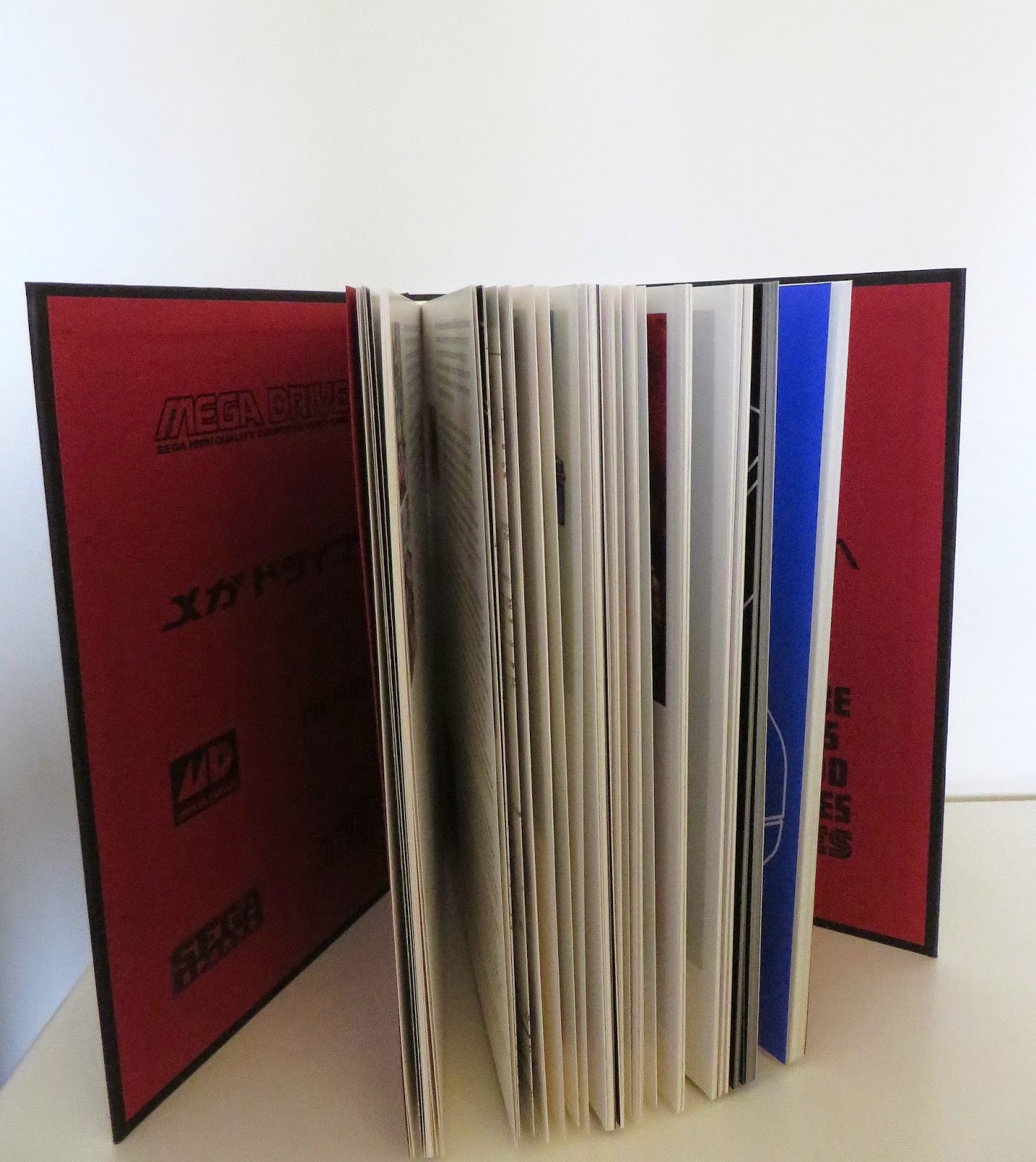
SEGA Mega Drive / Genesis: Collected Works – Review

Any great book starts with a beginning...


And here it begins where it should always start – at the birth before the start. Before the Mega Drive / Genesis came about and the advertising and the games development. Before the original hardware and then the hardware add-ons that came with it. Before the end.


This story illustrates how Sega went head to head with Nintendo when Nintendo was at the top of it’s game bringing about the ups and the downs and the story behind this epic saga of console wars. What came from this was a series of legendary titles that any gamer in their right mind should own.

Whether you are a Sega fan boy or girl it doesn't matter. The likes of Sonic 2, Streets of Rage, Golden Axe and many other games adorn this epic Sega saga. This is a global affair too – covering the Genesis in the US to the European Mega Drive, as well as the Japanese incarnation.

So this is just a written affair? Not at all. Once the story has been told by Games Journalist, Keith Stuart of the Guardian (and it doesn't drag on – just the right length for us personally with little time to spare to read these days!) we get into the visual representation of what makes the Mega Drive an icon, as well as a leading games consoles of it’s time.

This is split into key categories – some of which include:

Hardware; including development documents, schematics, a showcase of hardware released concept drawings, as well as those which remained as concepts. Even to the extent of showing product design notes for the avid fan.

Game Packaging and Character design; a massive amount of detail and artistry here. Many previously unpublished items and visual references to the wonder of Sega in the 90s.


Interviews; here we get underneath of the skin of the brand and the people who pioneered the industry at the time. From the legend of Yu Suzuki who made the arcades his own in the 80s, to Art Director Kazuyuki Hoshino – famous for his involvement with Sonic Team in the early 90s and beyond. This is an interview list that you won’t see elsewhere.


Benefactors; finishing off nicely the book thanks the gamers who made it happen….You and us here at GYL. The community who not only put their hand in their pocket to fund the book on Kickstarter. But we all helped in talking about this book during the funding period – shared it with our friends out there in the world and made it happen. We also couldn’t have done it without one man, Darren (Wall) himself of Read-Only Memory. Without Darren and his vision for the book from the concept to delivery we wouldn't have such a great legacy told in print.


The book uses the highest quality printing and reproduction to bring this all to life. Each section in the book not only uses different paper stock but different layouts to wow us.  The complete book is a solid piece indeed.

In some ways a review like this could be spoiling your own surprise factor, so we can’t go into every little detail which might do that. Like a good movie you should find out for yourself. Hopefully the images and words here tell some of that story to give you an insight without giving too much away.


Whether you lived through the early 90s and throughout to the late period of the Mega Drive - or whether you a younger gamer picking the Mega Drive up now as a retro console for the first time -  this book is going to appeal to you.

In terms of a book on the subject – we think this is the No 1 choice for anyone.

You can buy the book from Read-Only Memory – here is the link: http://readonlymemory.vg/ 


Monday, 3 November 2014

HD Retrovision - A Kickstarter Interview


We spoke to HD Retrovision about their now 'Live' Kickstarter project - its goals and expectations, and why its so important to support retro gaming systems of days gone by.


Tell us why you choose to work on a Sega & Nintendo retro gaming product - rather than a new generation console accessory?

We grew up on these consoles and they're the reason we're gamers today. It saddened us to see them threatened by the lack of support on modern TVs. 

Who are the products designed for?
The products are really designed for anyone who wants a simple, affordable, yet high quality solution to playing their old consoles on new TVs. It's true other solutions exist, but they can be expensive and messy, or require people to have hardware skills they don't have.

What was is about the Genesis and SNES that makes it so special?
The games on those consoles represent the pinnacle of gaming to us in a lot of ways.

The games had enjoyable story lines without hours of cutscenes, and designers were focused more on awesome gameplay than making the game have movie-quality graphics. They also feature some of our favorite video game music of all time. I still hear the Desert Strike theme in my head regularly.

How important are playing games for you when you making a product like this?

Very important. We've tested our cables across on many many games to make sure we don't run into anything unexpected. It's really the only way to know if you're going to run any issues if someone plugs a Sonic 3 into a Sonic & Knuckles into a Game Genie.

How has your background and experience contributed to the development of this Kickstarter?


Besides being avid gamers, we're both electrical engineers and mathematicians by training. This has contributed to us being very precise and methodical in our development of the cables. 

Tell us a bit about the technical details to feature in the product?


The concept behind our cables is not new, but the implementation is radically different. Through careful engineering, we are able to fit our custom electronics into a tight, enclosed space without an additional power source. This approach lowers the cost and headache compared with competing solutions, which we hope will give more people access to high-quality retro-gaming.


Left - composite video, Right with component from HD Retrovision cables
What are your favourite 5 Genesis games of all time?
Streets of Rage, NBA Jam, Kid Chameleon, Toejam & Earl, Earthworm Jim

What are your favourite 5 SNES games of all time?
Megaman X, Chrono Trigger, Super Castlevania IV, Shadowrun, The Legend of Zelda: A Link to the Past 

What does retrogaming /gaming mean to you?
It's the a link back to our childhood. Retro-gaming brings us back to an era where some of our best memories were formed, often while playing these games with a good friend or sibling.

Back the Kickstarter here: 


Saturday, 13 September 2014

Putty Squad to get a physical Amiga release after 20 years!

Set to be used as special pledges in an upcoming Amiga book Kickstarter campaign, 100 physical replica copies of Putty Squad for the Amiga are set to be produced!

These 100 copies will come in authentic replica packaging on actual Amiga floppy disks. Bitmap Books have gained exclusive permission from System 3 to produce these copies of Putty Squad and will work with them closely to ensure that the final packaging is as near as possible to how Putty Squad would have looked if released in 1994.

50 of the 100 copies will be signed by the original Putty Squad development team.


Commodore Amiga: a visual commpendium
Commodore Amiga: a visual commpendium is Bitmap Books follow up to their hugely popular debut book; Commodore 64: a visual commpendium. Following on from the C64 book, the Amiga book will focus on the visual side of the computer featuring stunning pixel art, game maps and box art. It will also showcase the best software houses on the Amiga and is set to feature the Amiga demo scene.

The Kickstarter campaign starts on the 13th October and runs for 30 days. So far, some really exciting contributors are lined up and Commodore Amiga: a visual commpendium is set to be Bitmap Books biggest project yet.

Sam Dyer of Bitmap Books says ‘Putty Squad remains the Amiga’s most famous unreleased game. To be able to take Galahad’s 2013 release and produce physical copies of the game is hugely exciting. Huge thanks to System 3 and Galahad for allowing this to happen.”


About Putty Squad
Putty Squad was developed by System 3 and the follow up to 1992’s insanely good Putty. Set to be released in 1994 but this famously never happened due to the twindling Amiga market, but a pretty much full game remained in the System 3 archives. Fast forward 20 years and thanks to English Amiga Board member Galahad, in 2013 a version was released as a Christmas gift on System 3's website as free digital download.


About Bitmap Books
A new publisher specialising in beautifully designed and produced books all about video games. Commodore Amiga: a visual commpendium is the second book by Bitmap Books.

www.bitmapbooks.co.uk

Follow on Twitter @mrsidc64

Thursday, 11 September 2014

My top 5 movie licence games by Sam Dyer of Bitmap Books

Everyone loves a good movie licence game tie-in. 
Back in the day, all it took was a mildly popular film and before you knew it a game was released.  
Sam Dyer - Author. www.bitmapbooks.co.uk

Here are my top 5. 


5. Platoon (C64) 

Ah, an 18 rated film made into a video game for kids! Set in the Vietnam war, Platoon was an Oscar winning film directed by Oliver Stone starring Charlie Sheen. A classic war film that is full of violence, guns and death. Sounds like the perfect ingredients for a children's video game. The Commodore 64 version of Platoon was programmed by Zach Townsend and the awesome soundtrack was by Jonathan Dunn. The the actual game is a series of mini-games. The first is a platform shoot em up where you must find your way out of the jungle maze whilst killing enemies that come at you from all directions. Its really tough but great fun. The later levels then turn into a really impressive first person shooter style game. Platoon on the Commodore 64 offers great graphics, expert programming, plays really well and overall; does not feel rushed. Lost hours playing this pretending I was a war hero in the Vietnam jungle. Platoon was also released on Amiga, Amstrad CPC, Apple II, Atari ST, PC DOS and ZX Spectrum. All of which look like pretty decent versions.


4. Indiana Jones and the Last Crusade (C64) 

If there was a fast buck to made and a game to be rushed, you know that US Gold would have to get in on the act. In 1989 they released Indiana Jones and the Last Crusade on the back of this hit film which starred Harrison Ford and Sean Connery. Now I may be wearing my rose tinted spectacles, but I really like this game. Its a platformer that sees you control Indy and must go in search of the Holy Grail. The plot stays pretty faithful to the film and it sees you start in a series of caverns. You must make it to the surface in the pitch darkness but collected torches that enable you to see where to go. The torches burn down so you much grab another before it does. You can you your whip to kill enemies. Once you make it out of the caverns you must then make your way across a train roof. The game style changes slightly towards the end which adds variety. It plays great and is really good fun. So it it's not massive (4 levels), the sprites are poorly drawn and it feels a bit sluggish. The magazines didn't rate it either but for some reason it holds a special place in my gaming heart. I have not seen any other conversions but oddly, the Amiga version was an excellent point and click by LucasArts. Well worth checking out.


3. Robocop (C64 and Spectrum) 

Another ultra violent film made into a game for 9 year olds! Released in 1987, the film of Robocop saw cop Murphy brutally (almost) killed by a gang of criminals and is then brought back to life and turned into a robotic policeman. Robocop then embarks on his one man fight against crime. A great film and a real classic. Released in varying forms on pretty much every system known to man, it was the Commodore 64 version that I actually owned. The games also changed across each system too. The arcade version is a different game to the home 8-bits. The Spectrum, Amstrad and C64 versions have differences. The NES and Gameboy versions also differ. Now, in hindsight the Spectrum version of this is much much better but back in the day, the C64 is the version I played. Jonathan Dunn is responsible for the epic soundtrack. It stays pretty faithful to the film plot. It even mimics the rape scene in the second level where you have to shoot the bad guy whilst missing the woman. Overall the presentation is great. The sound, gameplay and graphics all felt polished and well thought out. The Commodore 64 version got played so much when I was younger, it had to included in this list. A really cool film and a really cool game to go with it. Robocop stayed top of the game charts for months and months and was a massive hit when released.


2. Batman the Movie (C64 and Spectrum) 

A member one of my family who is no longer with us brought me this for christmas 1990 so it's very nostalgic for me. I remember been really impressed with the striking box art and couldn't wait to give it a go. I have reviewed this game before and i'm sure everyone knows it well. As a whole package, I think its the best game on the C64. After recently seeing and playing the Spectrum version, this is also very very good if not better than the C64 version. From the box art to the music to the graphics to the gameplay, it really stands out as a game that pushed these systems to their limits. The most impressive part was that it followed the film plot almost exactly. Level by level it followed the film. This showed great attention to detail and real creativity. The Amiga version is also worth a shout out as it looks amazing. Batman games are still been produced to this day on modern systems which really shoes the strength of this movie franchise.


1. Goldeneye (N64)

As a massive bond fan, none of the Bond games that preceeded Goldeneye really did it for me. From the average View to a Kill to the awful The Spy who Loved me.They were ok but just not amazing. There was a gap in the market for a video game that actually was as good as the amazing films. So when Goldeneye came along in 1997 on the Nintendo 64 it blew me away. The only first person shooter id seen previously was Doom and Duke Nukem and Goldeneye was a massive step forward. The graphics were out of the world and the playability was so addictive. I was a little older when it was released so I would hang out with my mate, usually up to no good and spend hours and hours playing muliplayer battles. It featured characters from the film and also classic bond good and bad guys. Its a classic game that behind Mario 64, defined the N64 and helped sell them by the bucket load.

So that concludes my top 5 movie licence games. Do you agree or disagree with my list? 
Thanks, Sam 

PRE-ORDER Commodore 64: a visual Commpendium now:
http://www.funstock.co.uk/commodore-64-a-visual-commpendium-c64-book

View the Kickstarter: https://www.kickstarter.com/projects/2146199819/commodore-64-a-visual-commpendium-by-bitmap-books 

Facebook: https://www.facebook.com/sam.dyer.54584 

Twitter: @mrsidc64

Tuesday, 5 August 2014

Commodore & Amiga - EXCLUSIVE

We caught up with Sam Dyer at the point of printing his new Commodore 64 book at the printing press to see what his views on the Kickstarter success are and to the future with his Amiga book


Q. now you are at the proof stage how real does this all feel to you now? 

Sam:
It still feels massively exciting and I can't wait to hold an actual book. I think it will be surreal to actually hold one as I've dreamt of doing for so long! But I've loved every minute of the campaign. From initial concept,  promotional stuff,  kickstarter and the actual design it has all been a blast! 

Q. seeing the proofs now are there any spreads / games in the books that really stand out for you? 

Sam:
My favourite spread had always been Total Recall. Stephen Ian Thomson's pixel art in that game is stunning. Too see his image of Cohaagans eyes popping out on Mars across a double page spread is a joy to behold! The game maps have also come out really well and the detail picked up by the print is fantastic.

Q. how do you as a designer feel about this being your own hard work that is coming to light - a reality now?

Sam:
It feels very odd to be honest! I've worked on the book every night for the last 6 months in some form or another and it really has been a labour of love! To answer your question,  it's a mixture of excitement (and relief!). But most of all I feel proud of what I have created. 

Q what would you like to say to the community out there who has supported you? 

Sam:
You are ALL amazing. I have been seriously touched by the support I've had from all corners of the retro gaming community. Everyone has been so kind and to be honest, none if it would have been possible without this support. I must also say a huge thank you to a few people that have given up their own time and have been giving me advice along the way. So huge thanks to everyone at GYL, Andy Roberts, Mat Allen,  James Monkman and Steve Jarratt.

Q what is it about the Commodore 64 book that made it your first gaming book to focus on? 

Sam:
It was my first computer as a child and the one I remember with the most fondest memories. Also I felt there was a gap in the market for a visual book on the C64. It hadn't been done before and that appealed to me massively. I also knew that the C64 had a very active scene so drumming up interest would have been easier than picking a niche computer with a limited fan base. And most importantly,  I'm a HUGE fan of pixel art and the C64 has some of the best ever (in my opinion!)

Q. what have you learnt managing the kickstarter - positive and negative - any tips? 

Sam:
Ive learnt LOADS. I made some mistakes but I've learnt from them. Starting a small publishing business and running a Kickstarter was a huge learning curve for me and I must give a huge thanks to Tim Nicholls here. Tim ran the hugely successful Artcade book campaign and he very kindly gave me lots of advice at the start. This advice gave me the confidence to 'go for it'. Cheers Tim!

As far as tips go... I would say: Before launching your Kickstarter, spend a couple of months, drumming up interest,  join relevant forums, gaining a following on social media and produce a promo video. That way, when launched, you will already have done a lot of hard work around promotion and getting the word out there. People will not find you,  you have to find them. Get your numbers right! Do all the maths before you begin and set your total. Take into consideration all outgoings and TAX etc... by getting your numbers right, it means you won't have to stress about this side of things and can concentrate on enjoying the campaign.

Don't rest once funded! The C64 book was funded after only 1 week and it is natural to maybe take your foot off the gas and think 'Ive done it!'. It was at this point I had some fantastic advice from a friend that I should push on and make the campaign even bigger and better. "Don't stop now" he said. "Release some exciting stretch goals, more pledges and keep pushing the campaign 100%". Im so glad I took this advice as it really gave me that final push to make it as successful as it was.

Q give us some juicy gossip about the forthcoming Amiga book you have planned?

Sam:
OK! The Amiga book will be next book in the Commpendium series. It will follow the same style as the C64 book book and will act as a kind of big brother (or sister) to it. As far as gossip goes,  I have been working behind the scenes with Matt Wilsher on ways to make the Amiga campaign even bigger and better then the C64 one. 

All I will say is that we will be resurrecting a famous unreleased game as a physical product. Printed box, instructions and actual floppies. That is all I can say at the moment, all will be revealed soon!

To order the C64 book go here: http://www.bitmapbooks.co.uk/
To follow Sam on twitter to find out more about the C64 book and hear the latest on the Amiga book go here: https://twitter.com/MrSidC64

Friday, 4 July 2014

Grandmother buys old building in Japan, finds 55 classic arcade cabinets

Grandmother buys old building in Japan, finds 55 classic arcade cabinets

If you wanted to experience arcade games any time over the last forty years then you had to visit the Far East!. The game centers are still there lit up with neon lights all very attractive and Blade Runner like! But you have to go back 20 years to see them at their prime. Now one very lucky arcade fan is experiencing just that right now due to a surprise purchase by his girlfriend’s grandmother.
The grandmother agreed to purchase an old building in Chiba, which is just outside of Tokyo. When they arrived to check out their  building they found out that the first two floors used to be a game center in the 1980's!!. Whoever ran the arcade back then left all the cabs behind when it closed, and it is full of classic and now highly sort after games!
In total there are 55 arcade cabinets, most of which are the upright Aero Cities cabs, but it’s the game boards that they contain that’s the most exciting discovery. The list of game includes the following:
  • Columns
  • Donkey Kong
  • Galaxian
  • Magical Tetris Challenge
  • Metal Slug X
  • Pengo
  • Raiden 2
  • Super Puzzle Fighters 2 X
  • Street Fighter 2 Championship Edition
  • Street Fighter Alpha 2 (Zero 2)
  • Street Fighter EX 2
There’s sure to be more games discovered as not all of the cabinets are in working order, with monitor damage being the main fault but whatever they find, this lucky gamer has just cashed in his extra credit!!

Tuesday, 27 May 2014

Joypad...... The Super Warehouse Party!!!

Fancy a night off gaming , music and booze!  Then the Joypad Super warehouse Party 2 is probably the best night out you will have in a long time!  Based in Bethnal green in an old Pickle Factory,  two retrogamers (and also guys behind the party), Matt Farthing and George Swain bring you JOYPAD!

We spoke to Matt and he told us more about this event, and  with only a week to go until the big day he is getting very excited!


 What is JOYPAD WAREHOUSE PARTY 2?

SUPER WAREHOUSE GAMING PARTY 2!” is quite possibly the best time you can have with your clothes on. We’ve taken over a disused pickle factory in East London and turned it into a haven for lovers of retro/indie games, gaming culture and booze. We have 400+ original carts across NES, SNES, Megadrive, Mega CD, Saturn, N64 and a host of Indie devs showing off their work. Chiptune badass “Steve” will be playing a live set and My Panda Shall Fly and the Super Scratch Bros will be DJing throughout the evening. All whilst our lovely bar ladies serve up liquid refreshment!

What inspired you to start the event?

The gaming scene has exploded in recent years. It’s time for indie and retro game enthusiasts to shrug off the outdated label of ‘geeks’ and show that they can party as hard as the rest of the Saturday night crowd. I personally challenge anyone to play Bomberman with 7 like-minded ’strangers', beer in hand, chip tune blaring in the background, all whilst being cheered on by a baying crowd to not have the time of their life.


What sets you apart from other events?

 We marry together Indie and Retro. Many modern indie games are heavily inspired by the classics - but the two rarely meet! The party atmosphere is electric and you are surrounded by like-minded people. We also focus a lot on presentation; a Joypad SUPER WAREHOUSE GAMING PARTY is a pretty damn cool place to be.


Do you own all the games you feature?

We do indeed - we’ve both been collecting games our whole lives.


In your opinion, which era of video gaming was the greatest?

I personally adore the 16 bit era. The aesthetics of the time, both in terms of graphics and audio, has aged extremely well. It was a time when creativity and originality reigned supreme!


There seems to be a big musical influence in your event , how did that come around?

I am actually a musician by trade. So for me the combination of my two favourite things in the world comes pretty naturally!

What is your favourite console/computer?

It would be a tossup between the SNES and the Atari ST. I’m going to have to go with the SNES though... As I mentioned earlier - it just has the most fantastic design across the board. The sounds, graphics, even the console itself are all just beautiful! I also feel that some of the most unique titles in gaming came out on that console. I’ll always have a soft-spot for it.


What are your plans for the event going forward?

We’re planning on running SUPER WAREHOUSE GAMING PARTIES monthly - in interesting venues across London. We want to grow it in size in scope, maybe even branch out into some specialist events involving heavier focus on particular families of consoles or music. I also love the idea of running an all-nighter at some point (could get very messy!) Eventually, though, we will be opening our very own space - “Joypad". Then the SUPER WAREHOUSE GAMING PARTIES will have a permanent home.

Where can people get tickets to the event?


Monday, 14 April 2014

Jesse McClure - Storage Hunters - BLOG Exclusive

Everything is worth something, but some things are just not worth selling! 

I have a unique job where every day has something new in store, but I always have the same goal regardless: SELL EVERYTHING.  Having grown up in the art of resale since I was 12 years old, I have grown accustomed and built up a sort of immunity to the idea of keeping “stuff.”  The thought of finding something “cool” and potentially keeping it, whether it's from a storage unit, a garage sale, or an auction, no longer peaks my interest anymore. I don't mean to say that as if  I'm one of those mindless people that express zero-emotion in their day-to-day lives. It's more the idea that if I did not approach it this way, my house would probably be featured on an episode of  Hoarders!. You know, one of those reality shows where I am just like the 60-year old lady who has floor-to-ceiling trash filling her entire home and no longer has any room left for herself or her 12 cats to sleep anymore.


There is however, one thing, out of all the antiques, trash, electronics, cars, guns, dirty mattresses, and adult toys I find that I absolutely cannot come to terms with selling. Ladies and Gentlemen, that one thing, is arcades!!!!.


Since I was a small child I've had this fascination with these large machines that too many non-fans may just see as glorified televisions in a wooden painted box dedicated to one lame video game. But whenever I see an arcade, whether it is at a laundry mat (launderettes), a family fun centre, or even a pizza restaurant, I see something different. I see art.

To be quite honest, I'm not really even into playing video games. I get a joy in simply collecting and displaying arcades, as if they were literal pieces of handmade art, like a painting or sculpture. Now that's not to say that many of these machines were probably made on some assembly line in Japan, but I still appreciate them just the same.  

I just don't like the fully restored, pristine condition machines either. In fact, I have more beat-up, graffiti tagged machines then perfect condition ones. And you know what? That's okay with me. These aged machines tell a story.  A story when the arcade was king, when going to these late night amusement centres were a social hangout spot, when people would leave their homes to play video games, as opposed to locking themselves in their rooms to playing Call of Duty all night. (Nothing against any of those people, I love console gaming on occasion too!)  


I just love to see these classic monsters in action. I like to see people, young and old, English, American, whatever, enjoy the experience of playing an arcade. This is why I am so excited for Play Blackpool. I would be lying to you if I didn't tell you the 12-year old inside me is completely ecstatic about being a part of this exciting event. I can't wait to see all these games in action, and all the awesome people that will get to enjoy them. 

This coming May 3rd and 4th, me and thousands of others will be at Norbreck Castle in Blackpool having the gaming times of our lives! I hope to see many of you out there, and if you would like to get beaten in any classics, please just ask. I'm open to all challengers!

Thanks to
Jesse McClure - follow at @storagehunters

See at Jesse McClure www.playblackpool.net in May!


Saturday, 12 April 2014

Gaming - the 'Art' of Collecting and playing

My first console was an atari 2600 which I unfortunately do not still have. I've been collecting since I got my SNES when it first came out and I have never traded or sold any SNES game I've bought over the years

My first gaming experience I can remember is on my Uncle's pc not sure what it was exactly but it had big floppy discs. I'm 32 now and been gaming since I was about 6 or 7,  Super Nintendo is my favourite console followed by PS1

I'm currently looking online for arcade cabinets like Point Blank,  Street Fighter 2,  Tekken 2 and a few Others. When it comes to gaming art - Drawing wise,  I just like to draw.

My best games:

Atari would have to be Space Invaders or Asteroids as they were the games that got me started.  The sound effects on space invaders were very basic but had you in a blind panic once they started to speed up.

Sega I think Sonic 2 or Jet Set Radio and Sonic 2 because of the speed of it Sonic 1 was good but this game took it to another level. Chemical Plant Zone was unbelievable and Jet Set Radio because it was unlike anything else at the time and still stands alone today in originality of character and level design, 

I've got it on Dreamcast,  Xbox and PS3 it's that good, but it's Sony for me.  Metal gear or FF8,  metal gear because of the unbelievably realistic atmosphere at that time only Resident Evil came close to really thinking about the character and how to not alert any of the bad guys in the game, and FF8 because of everything; story,  graphics,  gameplay,  the card game (which I must have spent at least 30-40 hours playing alone).

When it comes to a SNES best game, this is the hardest for me as I could easily have a top 50. 


Legend of Zelda,  Mario World,  Goldeneye,  Mario 64, Zelda mainly because after playing it on NES originally and seeing the graphics then putting in the cartridge on my SNES and seeing Hyrule for the first time was amazing and then to top that - when it changed to the Dark Hyrule it opened up practicality another game.

Mario World as it was the first game I played on a SNES at a friends house and I knew that I had to have a super nintendo,  the level/character design was quality and still prove to be a challenge to this day,  

My sons both love playing this the most on the SNES and play it daily,  Goldeneye is a fantastic game because of the multi player,  no connecting consoles and having 4 tvs all in one room plus the fact of it being awesome in 1 player as well! Finally with Mario 64 because of the mass there is to it, levels,  challenges,  stars to collect just a massive quality game.

And I don't care what any one on the net says about emulating any of these games there's nothing better than playing them the way they are meant to be played with the proper pad and the original console.


Thanks the Daniel Beech for his Guest Blog
You can follow Dan on Twitter to at @Danny_Beech1981

Friday, 4 April 2014

Hints and Tips for videogames pioneers – the video!


When Andrew Hewson announced to GamesYouLoved.com he was going to bring the wisdom of the 80s and 90s game development experiences to life through a ‘hints and tips’ book – we were excited to say the least!

Not only had Team - GamesYouLoved.com grown up with playing the Hewson and 21st Century Entertainment gaming classics across a range of different microcomputers - we had been fully aware of Andrew’s part in the UK’s gaming history which sprung up during the 80s and into the 90s.  

It was more than just making and publishing the games for Hewson. It was about a whole generation of kids like us at the time inspired to use a computer. The part Andrew played in providing articles and content for the gaming press as well as his own published books of the 80s is a testament to this cause.

There were the games too, Pinball Fantasies, Firelord Zynaps, Uridium and Nebulus –really fantastic games with amazing graphics and addictive gameplay.


The people involved with Hewson in the design, artwork and development of these games were our heroes. We wanted to know more and Andrew was there with the help of his son Rob to do the job for us.

Kickstarter provided a great forum for the project to live and really happen on a scale and was successful in its fundrasing and we at GamesYouLoved.com supported this thoroughly along with worldwide retrogaming community.

We were also privileged to hear first hand some of Andrew’s experience of Hewson in the 1980s at Play Expo Manchester - last October.

We heard about setting up the business and the early days, how Andrew marketed the business with investment in development rather than expensive advertising. Through the growth of gaming generally in the 80s, and Hewson with it into the years with 21st Century Entertainment. This footage provided by GamesYouLoved.com in collaboration with Hewson will help formulate the bigger story to what is an amazing narrative of gaming history - which is due to be told with the forthcoming release of the book.

Part one: Hints & Tips for Videogame Pioneers - Part 1/3 - The Birth of Hewson Consultants - - part 2 and 3 to follow:

Thursday, 20 March 2014

So You Wanna Be An Arcade Gamer?!

Emulation's What You Need 
By David Campbell


Emulation. Love it or loathe it, it is a means to an end for many a gamer.
Be it due to cost of collecting the real systems and associated paraphernalia, or be it due to restricted space, emulation is the gateway drug to a full on retro gaming habit.

Getting access to emulators for almost any retro system is a mere Google away, and once you find the rom images of your favourite game, the floodgates open.

"Oh, man, I remember that one.. and that- I used to love that one too!" is how it starts. 

Before you know it, there are external hard drives filled with every system imaginable and complete rom sets of every game, even the ones you've never heard of!

This has never been truer than in the case of MAME.

All of a sudden, these hulking machines that you loved as a kid, and never dreamed you could own - are now available to you, and are only a couple of mouse clicks away.

Getting MAME up and running is a pretty simple affair. and in no time at all, you are playing through some of your favourite games, and for a while it feels great.

But them you realise, it just doesn't feel right.

Arcade games were never played sitting in front of a keyboard. Hitting a key numerous times to fill the game with credits is not satisfying.

This unlocks something in you, and you start down one of three paths.

One - if you have the space (and the money), you might buy a couple of real arcade games. This will soon multiply and your house will soon be overrun with a multitude of cabs.

Two - you see about getting a MAME cabinet. You might save and buy a MAME cabinet from someone, maybe even buy a custom built one.

Three - and this is the most satisfying - you design and build your own MAME cabinet.

I went for the third option.

Framing Supports
Now, I realise not everyone has the skill, tools, or time to build their own cabinet. Let me start off by saying that I'm no carpenter - I can cut a pretty straight line and I'm good with wood filler :)

I spent about 6 months researching and designing my cabinet. Its not something you can do in a weekend. There are a few stages to it (if you want to do it properly), and I'd like to share my experience with y'all, in case it helps you in some way.

The first thing I did was decide on the type of cabinet I'd build. I grew up in the "golden age" of arcades, and as such I wanted my cabinet to have a traditional, old school feel to it. I wanted it to have a proper coin mechanism too, and I knew I wanted a classic style coin mech (more on that later).

Take a look at Jakobuds website (http://www.jakobud.com/plan-list.php) for some inspiration. I settled on a customised Taito style cabinet, reminiscent of most of the games from the early 80’s. You may be slightly younger, and your memories will be of Street Fighter II, Mortal Kombat, Virtua Fighter and the like. It really is up to you.

Once I knew the look of the cabinet I wanted, I started on the the part of the design that took the longest - the control panel.

Taking Shape
The only real trouble with a MAME cabinet is that it plays virtually all the arcade games you can think of. That might not sound like much of a burden, but arcade games had a plethora of unique controls to try and prise your pocket money from your sweaty palms. 

Here's just a  starter list of control types:
- Joysticks
- Trackballs
- Light Guns
- Spinners
- Rotary Sticks
- Steering Wheels
- Flight Yokes
- Twin Sticks
.. and there are a lot more besides this.

You can’t have all controls on your panel (and please don't try!), so I would recommend making a list of games you absolutely want to have in your cabinet.

List the control styles (you can check somewhere like the Arcade Museum if your memory is a little hazy - http://www.arcade-museum.com/) for each style of game, and decide what you can fit on your panel.

Control Panel Test
After much deliberation, I decided that I'd have a one player control panel, as it would only be me playing it 90% of the time. This comprises an 8 way joystick, and six buttons (more than enough to play Street Fighter etc). I knew I wanted a Trackball as I love Missile Command and Rampart. I added a second 8 way stick - not for a second player, but for games such as Smash TV, Karate Champ and Robotron.

For the icing on the cake, I also put two buttons on the side of the cabinet, which are flipper buttons for virtual pinball.

One other thing I decided on was that I wanted to be able to swap control panels, if I ever decided to make more specialist panels (driving or Ikari style, for example).

You also need to consider the monitor for your cabinet.

Purists will want a CRT, but these are hard to come by, large, and mey need repairing at some point. I put a 19" 4:3 (i.e. "square") monitor in mine, as most of the games were not widescreen back in the day.

At this point it may be worth mentioning that I use a PC to power my arcade cabinet.

However, throughout the design phase, and right up to the very end, I actualy designed the cab to run from an Xbox, Dreamcast and Playstation 2, using retail compilation discs. This allowed me to play 99% of the games I wanted to to, including light gun games (which generally need a CRT TV).

Paint it black
However, I opted for the PC in the end as it let me play 100% of the games I wanted, and then some!

There are pros and cons to the games console vs PC - its really a matter of personal choice for you.

Now, to interface real arcade controls with your computer (or console), I whole heartedly recommend what I consider to be the best interface on the market - the KADE (http://kadevice.com/). I've bought four of these beauties for various projects. They are inexpensive, straightforward to wire, and are customisable - they are USB powered, so easy to install!

Once you have your design, and I really would urge you to spend a lot of time on the design - no point building a cabinet that you don’t like or wish you had done differently- its time to actually build it.

There are many options and opinions on the best materials to use to build a cabinet. I opted for 25mm MDF for mine. Some people may be horrified at this, but its easy to work with, durable, and can take a battering!

It took me a week from start to “finish” to create my cabinet. You’ll need at a bare minimum the following tools:
  • Circular Saw
  • Jig Saw
  • Drill
  • Screwdriver
  • Hole Saw

Beta Testing
Take your time cutting the panels. Its easier to take a bit longer with no mistakes than to rush and have to fix a mistake!

Once all your panels are cut, Take the time to ensure that the base and sides are square. If they’re off at all, your cabinet will wobble and the control panel won’t fit properly.

Like I’ve said before - take your time!

Once all the parts are assembled, you need to paint it. This will take the longest time because you need to allow the paint to dry (obviously!), but you also need to do many coats to get a good finish.

I sanded the whole cabinet then wiped down with white spirit prior to priming to ensure the best surface possible.

Prime the whole cabinet with MDF primer. Don’t skip this step or scrimp by using cheap primer - MDF is like a sponge and will absorb paint, so primer it with proper primer to seal the pores and give you a good foundation.

Once your first coat of primer is dry, lightly sand it back with a medium grade sandpaper. This will allow your second coat of primer to fill any minuscule bumps (which look huge once painted!) and give you a nice finish. Wipe down the whole thing with a damp cloth and allow to dry before applying the second coat.

For me, two coats of primer was a good base. I painted my cabinet gloss black - obviously you can paint yours in any way you like. The process of painting was the same as the primer - paint, sand, wipe, paint.

I used a mini foam roller to paint my cabinet. Some people prefer brushes, but the roller gave my cabinet a nice texture that I liked - some people might not like that and prefer a totally smooth finish.

These decisions are the benefits of building your own cabinet!

Here’s a quick overall list of materials I used in my cabinet:
  • Three 8’x6’ sheets of 25mm MDF
  • one 750ml pot MDF primer
  • one 750ml pot black one coat gloss
  • one 36x36” sheet MDF for monitor cover and marquee

Hopefully this gives you an overview of building your cabinet.

There are many great resources out there, and here are a few that helped me immensely:


Have fun, and if you’ve any questions, get in touch and I’ll try to help!

Guest BLOG by GYL Fan - David Campbell