Showing posts with label Sega. Show all posts

Sunday, 7 December 2014

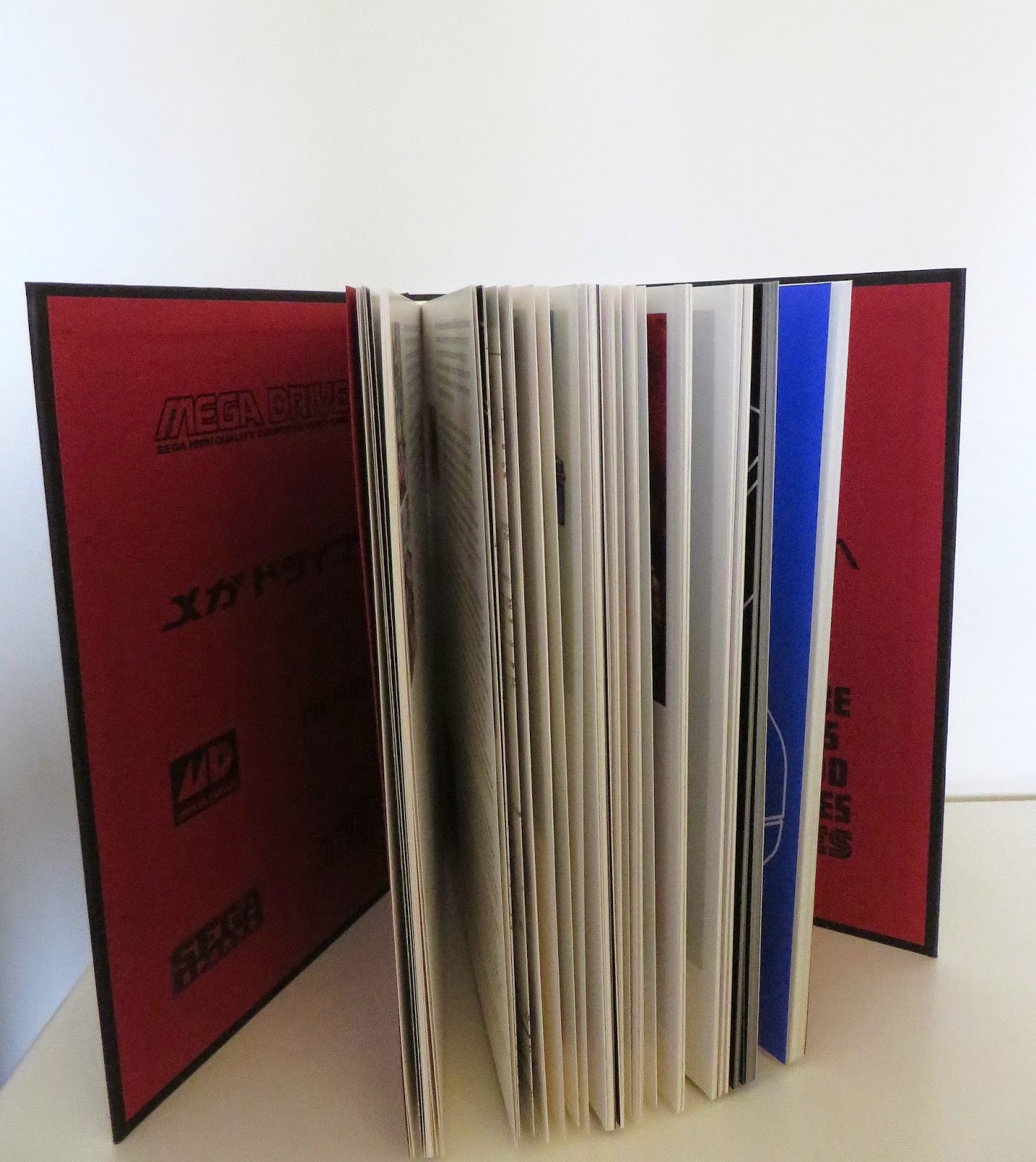
SEGA Mega Drive / Genesis: Collected Works – Review

Any great book starts with a beginning...


And here it begins where it should always start – at the birth before the start. Before the Mega Drive / Genesis came about and the advertising and the games development. Before the original hardware and then the hardware add-ons that came with it. Before the end.


This story illustrates how Sega went head to head with Nintendo when Nintendo was at the top of it’s game bringing about the ups and the downs and the story behind this epic saga of console wars. What came from this was a series of legendary titles that any gamer in their right mind should own.

Whether you are a Sega fan boy or girl it doesn't matter. The likes of Sonic 2, Streets of Rage, Golden Axe and many other games adorn this epic Sega saga. This is a global affair too – covering the Genesis in the US to the European Mega Drive, as well as the Japanese incarnation.

So this is just a written affair? Not at all. Once the story has been told by Games Journalist, Keith Stuart of the Guardian (and it doesn't drag on – just the right length for us personally with little time to spare to read these days!) we get into the visual representation of what makes the Mega Drive an icon, as well as a leading games consoles of it’s time.

This is split into key categories – some of which include:

Hardware; including development documents, schematics, a showcase of hardware released concept drawings, as well as those which remained as concepts. Even to the extent of showing product design notes for the avid fan.

Game Packaging and Character design; a massive amount of detail and artistry here. Many previously unpublished items and visual references to the wonder of Sega in the 90s.


Interviews; here we get underneath of the skin of the brand and the people who pioneered the industry at the time. From the legend of Yu Suzuki who made the arcades his own in the 80s, to Art Director Kazuyuki Hoshino – famous for his involvement with Sonic Team in the early 90s and beyond. This is an interview list that you won’t see elsewhere.


Benefactors; finishing off nicely the book thanks the gamers who made it happen….You and us here at GYL. The community who not only put their hand in their pocket to fund the book on Kickstarter. But we all helped in talking about this book during the funding period – shared it with our friends out there in the world and made it happen. We also couldn’t have done it without one man, Darren (Wall) himself of Read-Only Memory. Without Darren and his vision for the book from the concept to delivery we wouldn't have such a great legacy told in print.


The book uses the highest quality printing and reproduction to bring this all to life. Each section in the book not only uses different paper stock but different layouts to wow us.  The complete book is a solid piece indeed.

In some ways a review like this could be spoiling your own surprise factor, so we can’t go into every little detail which might do that. Like a good movie you should find out for yourself. Hopefully the images and words here tell some of that story to give you an insight without giving too much away.


Whether you lived through the early 90s and throughout to the late period of the Mega Drive - or whether you a younger gamer picking the Mega Drive up now as a retro console for the first time -  this book is going to appeal to you.

In terms of a book on the subject – we think this is the No 1 choice for anyone.

You can buy the book from Read-Only Memory – here is the link: http://readonlymemory.vg/ 


Saturday, 15 November 2014

Every Day is Play. The Celebration of the Video Game - Review

This isn't just a book about gaming...it's a life story


When Matt Keynon set upon a journey of the discovery of gaming - he didn't realise at the beginning it would take him through so many adventures to get to his end goal - a somewhat similar experience to a video game.

Every day is play: The celebration of the Video Game is one of the greatest books we've ever read and reviewed. Let's just get that out there first of all. And we'll tell you why...

This bible of gaming is about Matt's dedication to the spirit of gaming - its art and design and the play and fun associated with what is a passion and obsession for many gamers - including ourselves here at GamesYouLoved. This isn't just a 'hobby'  - it's a way of life.

We did know a little bit about Matt and his homage to gaming previously - having seen some of the Mega Drive Exploded Series and graphic gaming art imagery released a few years back. 


But his story goes back even further than this. In fact it starts when Matt was just 6, having inherited his Uncle's Atari MVS and a batch of games. This initial spark set him on a path of play, discovery and investigation. His intro piece to this in the book describes it beautifully (no spoilers further!).

And this book is a result of his hard work..from the time in 2005 when the idea of producing a book first came to Matt - to now, when we can all enjoy the fruits of his labour.  
With Nolan Bushnell the founding father of Atari and video games writing the foreword - this could only get better. And it does. Visually stunning artwork and design stretches from cover to cover and we love the mix of and variety entries, which for us sums up gaming over the years. It has no limits - to our imagination as gamers and the people who make and develop video games.


From Mario to Sonic, Pac Man to Space Invaders, all the popular characters are here. But even they are not just in typical form as you often see in popular media. Artists, publishers and game developers re-enact these gaming characters in different forms in captivating artwork. You will be surprised, engaged and interrupted (in a good way) with every page turn. And this is no comic or lightweight read. Weighing in at over 300 pages this is heavyweight in every sense of the word. And the print and finishing quality...Well - judge for yourself from these pictures. Anyone into having quality books on their gaming shelf will appreciate what we have here.

In terms of specific content - there are many many entries and contributors to the project. Including Darren Wall's Rom Alerts - showing off the 16-BIT work in 2005 to the Sensible Software book just recently. Edge Magazine has an array of interesting cover artworks that hit you from the beginning too.


Art is a key factor and the likes of Atomike Studio use Mario to great effect, as well as some impressive console art. 

We could go on. 


The imagery here should do the talking. And over the next few weeks we will be releasing more on our Instagram and social channels on Facebook and Twitter.


Finally lets not forget - this book could not have been made without you...the community. As a Kickstarter success this project was successfully delivered by Matt with his massive effort, skill, dedication and determination - and you believed in him.  

Well done - you have a fantastic book to show for it!

Get yours here:

www.fangamer.com

Matt's links:

www.gamepaused.net

@matthewdkenyon

Sunday, 9 November 2014

How to set up SEGA CD / MEGA CD on the JXD

As part of the HOW TO Guides for JXD...GYL Fan and Friend Sean Tagg gave us a ten point plan to get the Sega CD/ Mega CD running 

GET 5% off a JXD at www.funstock.co.uk by using discount code: GYL 


Here goes:

1.download and install MD.EMU, then select the App.


2.Select Options / System.


3.You will need to Download the Bios files for Europe, USA and Japan if you want to play game from all regions.
Select USA Bios and then locate the path to your saved USA Bios file. Seen below [bios_CD_U.bin]. Find all 3 file paths.


4.Download a SEGA CD / MEGA CD rom.  Google search!

5. Only games with the .iso & .wav files are compatible. Click on file listing to check.


6. All good!


7. Click on the file to download then unzip the file into a folder with your game name.
Copy the folder over to your JXD game folder.\


8. Open up the MD.EMU app and select Load Game. Find your games folder and select the game.


9.Select the game ( .Cue file)


10.The game will load


Thanks,

Sean (OutRun86 Blog)

Also follow Sean on Twitter at twitter.com/sean_tagg

Monday, 3 November 2014

HD Retrovision - A Kickstarter Interview


We spoke to HD Retrovision about their now 'Live' Kickstarter project - its goals and expectations, and why its so important to support retro gaming systems of days gone by.


Tell us why you choose to work on a Sega & Nintendo retro gaming product - rather than a new generation console accessory?

We grew up on these consoles and they're the reason we're gamers today. It saddened us to see them threatened by the lack of support on modern TVs. 

Who are the products designed for?
The products are really designed for anyone who wants a simple, affordable, yet high quality solution to playing their old consoles on new TVs. It's true other solutions exist, but they can be expensive and messy, or require people to have hardware skills they don't have.

What was is about the Genesis and SNES that makes it so special?
The games on those consoles represent the pinnacle of gaming to us in a lot of ways.

The games had enjoyable story lines without hours of cutscenes, and designers were focused more on awesome gameplay than making the game have movie-quality graphics. They also feature some of our favorite video game music of all time. I still hear the Desert Strike theme in my head regularly.

How important are playing games for you when you making a product like this?

Very important. We've tested our cables across on many many games to make sure we don't run into anything unexpected. It's really the only way to know if you're going to run any issues if someone plugs a Sonic 3 into a Sonic & Knuckles into a Game Genie.

How has your background and experience contributed to the development of this Kickstarter?


Besides being avid gamers, we're both electrical engineers and mathematicians by training. This has contributed to us being very precise and methodical in our development of the cables. 

Tell us a bit about the technical details to feature in the product?


The concept behind our cables is not new, but the implementation is radically different. Through careful engineering, we are able to fit our custom electronics into a tight, enclosed space without an additional power source. This approach lowers the cost and headache compared with competing solutions, which we hope will give more people access to high-quality retro-gaming.


Left - composite video, Right with component from HD Retrovision cables
What are your favourite 5 Genesis games of all time?
Streets of Rage, NBA Jam, Kid Chameleon, Toejam & Earl, Earthworm Jim

What are your favourite 5 SNES games of all time?
Megaman X, Chrono Trigger, Super Castlevania IV, Shadowrun, The Legend of Zelda: A Link to the Past 

What does retrogaming /gaming mean to you?
It's the a link back to our childhood. Retro-gaming brings us back to an era where some of our best memories were formed, often while playing these games with a good friend or sibling.

Back the Kickstarter here: 


Thursday, 29 May 2014

When Retrogaming meets modern technology


The retro-bit Super Retro Trio arrived in the post this morning. Sick of the delays with the RetroN5, I cancelled my preorder at the weekend after the word got out that the console would not be reaching the UK before September and found this alternative in stock at funstock.co.uk at the very tempting price of £69.99 a full £50 cheaper than its competitor.

The cheaper price tag, however does mean less in the way of features. No save states or built-in cheat systems, no HDMI output. I wasn't interested in the former, and I can live with AV/S-video through my SCART connector. So what do you get for your money? Here's what the official blurb says:

Supports NES/SNES/MEGADRIVE/GENESIS
Compatible with original and third party controllers
Includes 2 controllers
AV / S-Video connectors
AC Adapter
PAL / NTSC / PF / NJ Region Switch

What you get is quite a nice looking console, it feels a bit light and cheap but hey – it was cheap! I have the silver and black model, there is also a red and black version. The top of the unit sports 3 cartridge slots from the back coming forward – NES, SNES and Megadrive/Genesis, in front of these are a reset switch and a power/slot selection switch.


On the front a push releases the cover for the controller ports, here you can plug in original controllers 2xNES, 2xSNES and 2xMegadrive/Genesis. The 2 included controllers plug into the 9 pin Megadrive ports but are shaped like SNES controllers just to keep you on your toes! ;)

The bundled controllers are actually very decent and for that reason will probably see a fair amount of use, the buttons and d-pad give a very similar feel to those on my original controllers. Also behind this front cover is a selector switch for the controllers in use and a region switch for Megadrive/Genesis games for those with region protection. As mentioned there is a cover/door so you can unplug your controllers and close it up to keep things looking all neat and tidy when not in use.


Finally round back there are the DC in socket, S-video and A/V ports. The provided power adaptor has a US plug but does not require a step down converter and an UK adapter was provided for me.
My TV had some issues with the video signal through the A/V (this is not exclusive to the SR3 – I've had this issue in the past) so I use a cheap A/V+S-Video to SCART adapter and it works fine for me.

Now, the big question – compatibility! I don't have a huge pile of carts to test especially on the Nintendo side of things so here's what I have tried all work unless otherwise specified.


Megadrive:

M6 cart (Sega Soccer, Columns, Super Monaco GP, Revenge of Shinobi, Sonic, Streets of Rage) so far played Sonic, Revenge of Shinobi and Super Monaco GP
World Class Leaderboard
T2 The Arcade Game
Golden Axe
Streetfighter 2 Special Champion Edition

Genesis:
Lemmings

NES:
Track and Field 2 (PAL version)

SNES:
PGA Tour Golf (PAL)
Starwing (PAL) 

That's all I've tested on it so far I'm afraid, I need to acquire some more NES and SNES games to try out but it seems to be fine with every Megadrive game I've thrown at it. There is also a Super Retro Advance Adapter (sold seperately) that allows you to play GBA games as well.

In conclusion I'd say it's really good value for what you pay, it looks nice and doesn't look out of place under the TV, the controllers are decent, it might not have all those fancy features or HDMI but it is available now and cheap enough  to be worth a shot.

You can buy your own RetroTrio console here at Funstock.co.uk

Thank you too Jamie Gunn (@highlandboarder) for his time and review! 


Friday, 7 February 2014

GYL Visits the Centre for Computing History

Here at GamesYouLoved we can’t get enough of all things retro...Games, toys, gadgets – we love nothing more than revisiting the past and firing up those memories that we had all but forgotten! 


Needless to say, when we were invited up to Cambridge to visit the Centre for Computing History we could not believe our luck! So, on a glorious Saturday morning the GamesYouLoved team hopped into our Deloreon (we wish!) and took a journey back to the future...

The Centre for Computing History is a computer museum that ‘tells the story of the Information Age’. It explores the historical, social and cultural impacts of personal computing by looking at the hardware and software that has made an imprint on our lives. Registered as a charity, it is backed by Google, Microsoft and the Open University (amongst others), and hopes to educate a new generation who know very little about the history of computing.

The first thing you will notice walking into the museum is a wealth of computer hardware spanning all the way back to 1958. From Commodore to Sinclair -  Apple to Amstrad, there is an astonishing collection of computer hardware to play with and explore, some of which you will recognise, some you will not. What was most striking about having different generations of computers in one place is how they have evolved over time. Physical design, software and function have all been transformed by technological capability and consumer demand, and it leaves one wondering where computers will go next...

In this modern age of laptops, phones and tablets it’s easy to forget that in the past computers were uncommon for consumers. The first personal computers were unwieldy and lacking in function, and it’s fair to say that these early machines were received with scepticism by the public (not least due to their excessive price!). Many would argue that it wasn’t until the dawn of the games console that computers truly excited consumers – they opened up new realms of interactivity and were a platform for creativity and storytelling. 


The museum pays full attention to this viewpoint by including an impressive collection of games consoles for visitors to play. With a roster that spans all the way from Pong to the PS2, you are able to see how consoles and games have evolved.  One minute we were thrashing it out on Tekken 1, the next we were putting our reflexes to the test with Sonic. There are also 3 arcade cabs to check out, which perfectly demonstrate the sheer variety of computing hardware.


The museum often plays host to events, and we were lucky enough to attend during a Super Smash Bros tournament (check out our review of Super Smash Bros 64 
http://www.gamesyouloved.com/game-genre/consoles/nintendo/nintendo-n64/super-smash-bros/  

As the first event of its kind at the venue, there was a little uncertainty about what the turnout would be, but these concerns were swiftly put to bed as over 60 of the country’s best Smash players filtered in, carrying with them N64s, Gamecubes and Wiis on which to do battle.


Overall we were incredibly impressed with the museum. With its astonishing collection of computer and gaming hardware there is so much to see and do. For adults and children alike, there is so much to discover at the Centre for Computing History. 

Visit their website to check out more -http://www.computinghistory.org.uk/

Thursday, 5 December 2013

Exclusive SEGA Kickstarter Interview - Darren Wall - Read only Memory

SEGA Mega Drive/Genesis: 

Collected Works


Hi Darren...great for you to spare a moment during your amazingly successful Kickstarter with just 4 days to go now, how are you feeling?

I feel a bit like I've had a baby! I'm up all hours, aware of the many months of hard work ahead of me - but at the same time I'm terrifically excited and satisfied. Running a Kickstarter campaign is a really consuming task, but I don't think I've ever done something as rewarding. I've been able to speak to so many Sega fans and legendary developers in the past few weeks... it's been great fun.

Tell us why you choose to work on a Sega Mega Drive book of all things?

We were asked by Sega to pitch on a documentary book after they saw our first title - Sensible Software 1986–1999. I picked the Mega Drive as it was the defining console for me and I felt like I was pretty well positioned to tackle it confidently. I tried to draw up a proposal for the Mega Drive book I wanted to own myself and not try to get too bogged down in what would be commercial or second guess what they might want to see. We were staggered to hear that they liked the proposal and we were offered a license.

Who is the book designed for?

The book is for anybody with a connection to the console. We cover so many aspects of the era - from production artwork to the hardware itself, right through to developer interviews - I'm hopeful every fan will flick through the book and immediately be confronted with brand new material related to games they have already have an intimate connection with.

What was is about the Mega Drive that makes it so special?

I was 10 when I first played the Mega Drive. Everything about it seemed incredibly stylish... almost cocky in fact. The design of the hardware, the packaging, the advertisements... it had a kind of 'swagger' that was completely absent in other machines. Going over it again now, it is apparent just how important Sega's marketing was to its success in the West.

How has Keith been working on the project - is playing the games part of it for him and you?!

Keith has been interviewing and writing for several months now - when he's not appearing in prime time TV shows - and yes! we've both been reminding ourselves of the games as we worked through the book. I was particularly struck by how well Comix Zone plays after all these years.

Have you / Keith had any interesting adventures tracking people and information down for researching the book?

There have been plenty of adventures, particularly in the last few weeks since the Kickstarter launched. Several backers have introduced us to legendary Sega figures we were previously unable to get hold of. Within a few days of the project going live I was being introduced to huge figures such as Hayao Nakayama and Tom Kalinske!

We've also had some great moments with some of the Japanese developers - in conducting the interviews it became apparent that some of them still had pencil and paper development artwork at home after all this time! Makoto Uchida  in particular still had line drawings of monster ideas for Alien Storm which we just recieved this morning.

How have SEGA contributed to the development of the book?

They have been incredibly helpful. They have rooted through their archive for us and found some great material. Possibly the most important find they made was a collection of hand drawn plans for the case of the Mega Drive itself, along with a selection of unused controller designs. The also helped us to get in touch with many of the original game developers.

Tell us a bit about the artwork to feature in the book?

There is a great mixture of slick, highly finished production artwork and really rough 'n' ready, sketchy stuff from the early stages of the design process. To give a flavour of what's in store, there are character paintings for The Revenge of Shinobi, boss sketches for Wonder Boy III, detailed battle scenes for Golden Axe and really early, sketchy ideas for ToeJam & Earl. We'll also be featuring in-game artwork in a similar way to the Sensible Software book - showing off the detailed level maps and sprite sheets of iconic characters.

Tell us about the quality of finish of the book - we know as a designer and the quality of the Sensible Software book the print and finishing is very important to you as a Designer?

Yes, it is really important to me that the book looks - and feels - great. The biggest difference to the Sensible book is that this will be a large format hardback rather than a mid-size softcover. The paper will be a heavyweight matt art stock so the images will look their best and given the success of the project, we're looking at adding more pages and additional cover finishes too.

Did you learn a lot about SEGA and its games / hardware whilst being involved developing this book?

I'm still learning as we go! The insight into the development of some of the early Japanese games is extremely interesting and I think that will be a real highlight for fans. For instance, in our long-form interviews we learn of discarded boss fights from Shinobi, alternative level plans for Sonic and some surprising cinematic influences on classic Mega Drive games. I'm obviously being a bit coy here... I don't want to ruin the surprise!

What is your favourite 5 mega drive games of all time?

I won't be so bold as to place them in order, but I would select: Bonanza Bros., Micro Machines, Comix Zone, The Revenge of Shinobi and Streets of Rage 2.

Do you have plans to write a book on Nintendo after this one - balance the whole thing out then?!

That would be amazing! I would love for Read-Only Memory to produce more console documentary books. There's a lot of consoles to get through! I'd love to do more with Sega too, perhaps looking at other consoles like the Saturn and Dreamcast

There's still time to back the Kickstarter here: 

For more information:
Read-Only Memory
http://readonlymemory.vg

Friday, 1 November 2013

Evolution of an Arcade Junkie - Part one of two

By David Campbell

I was born in Scotland, in 1975. Some people may think that makes me old, but 1975 was a great year to be born. Let me explain why.

Portobello Beach Arcade - Edinburgh
Video gaming was in its infancy. There were a few primitive games out there, but the explosion of fast paced, vibrant games that made you forget where you were was still to come. Most younger people probably cannot comprehend what a magical time this was.
If you ask a teenager today what the first console game they ever played was, I would bet that the vast majority of them wouldn’t be able to tell you. 

Now, that may be because home video games are commonplace now, and part of everyday life. Back when I was a kid, however, home video games consisted of variants of Pong, generously labelled as “Sports” games. Sure, Atari and a few other companies would change all that, but arcades.. nothing could rival an arcade experience.

The sights, the sounds, the colourful images, the transition as your eyes adjusted from normal outside life to the darkened digital sanctuary, revealing the delights within. That moment where you scan the arcade, looking for your favourite game, or maybe a new game.. deciding which coin slot would earn the right to your hard earned pocket money.

I remember the first arcade game I ever played. It was at Haggerston Castle holiday park in Northumberland. On our first explorative walk around the camp site, my mum, dad and I discovered a large white building, with what appeared to be a TV sitting outside on a large box. As we approached, we noticed a steering wheel

I ran forward, curious and excited by this neon coloured delight. I deliriously pushed the pedal, rocked the wheel, moved the  gear lever up and down. My mum examined this strange beast, and did something that changed my life forever. She gave me 10p to put in the machine. It was Atari’s “Night Driver”. It was the stand up version, with a black and white screen. Rudimentary would be a generous description of the graphics, but to my four year old overloaded brain, I was there - I was in a car, racing along at breakneck speed, in the dead of night. I crashed lots. I got another 10p.. and my addiction was born.

Onto the 80s

My arcade addiction grew almost in parallel with the exponential explosion of the arcade industry after my experience with Night Driver in 1979.

We used to visit Portobello beach in Edinburgh for a treat day. I would make a beeline for the arcades, which were now plentiful. New games seemed to turn up every time I visited.

By 1983, we were in what has now become known as the “Golden Age” of the arcade.  Classics such as Asteroids and Space Invaders which people had swarmed around had grown into full colour, polyphonic coin swallowers. Pac-Man, Joust, Defender, Robotron, Galaxian, Donkey Kong, Gorf, Pole Position and Spy Hunter were the regulars in most arcades. Vast rooms filled with the sonic and visual cacophony of coins rattling, buttons being thumped, teaser sounds, laser blasts, explosions, jingles; “noise” to our parents, but a delightful symphony to my young ears. 

1983 would also be the year that created a fusion of two things that have defined me - video games and Star Wars. Atari released the seminal game of the film and allowed youngsters to fulfill their fantasies across the globe. Stepping into the large cockpit for the first time; settling on the gloss black wooden bench, hands gently cradling the flight yoke of the X-Wing... the anticipation was incredible. Putting the coin in the slot, almost in slow motion; it was sensory overload. To hear the Star Wars them pumped into the speakers, the crawling text, then BOOM! you are part of the Rebel Alliance, and you are flying an X-Wing in space. Obi Wan provides encouragement as your ship swoops and swerves, shields dropping with each TIE Fighter hit, then you nosedive straight into the Death Star trench. Get those Photon torpedoes on target, and you are rewarded with shards of the destroyed space station flying across the screen.

You emerge slowly from that cockpit, and it takes you a few seconds to realise you aren’t in space, but in an arcade. You look back at what you've just experienced. The game may only have lasted a few moments, but the smile on your face and the memories you’ve just created will last an awful lot longer.

David Campbell's story continues soon....


Wednesday, 11 September 2013

Summer Of Sonic 2013 Review - by AudioSprite

Prologue 
Being a life long fan of not just Sega but especially its high speed hero with attitude, I was delighted to gain the chance to attend this celebration of Sonic The Hedgehog. An entirely fan run event established in 2008, full of contests, cosplay, guest appearances and more, all in the name of the blue blur himself, located in the heart of Westminster, London.

I could hardly contain my excitement, great landmarks like Big Ben, Westminster Abbey and such other tourist hotspots seemed of little interest, I had one thing and one thing only on my mind, the event!

The Event 
After proceeding past the usual ticket inspection I was greeted with a free “Goodie Bag” Inside I found a Sonic hat, event programme and 20th Anniversary issue of “Sonic The Comic” Something I hadn’t read since my childhood, today was already shaping up to be a great one. Entering the first hall I was instantly taken back by the sea of blue that lay before me. All peoples of every age, race, colour and creed all united for the love of one Hedgehog and his many adventures, proudly wearing their Sonic hats!

The first hall also housed the merchandise stall for the day, stacked high with all manner of toys, books, clothes and accessories, I found myself returning to this often throughout the day, as it had some rare pieces such as a limited edition “History of Sonic” which I was determined to pick up.

The main hall housed many testing consoles for Sonic’s upcoming adventure “Sonic Lost World” Which unfortunately I did not get chance to play, but from what I saw looked promising and seems Sega are building upon the success of Sonic Generations release two years before. The main stage was also situated here, were we would later be treated to some very special guests, back in the first hall, two of them were being announced.

The Guests First to kick off the appearances, an art class with Sonic the Comic writers and artists, Nigel Dobbyn and Nigel Kitching, during which a contest open to all abilities was held for the best Sonic fan art. The level of which was pretty outstanding and could easily have been drawn from the masters themselves. From the main hall the” Megadrive Band” was providing a nice backdrop with Sega classics such as Golden Axe, Shinobi and Streets of Rage to name a few, somethi
ng which I could whole heartedly relate too. There were also various cosplay entries being made, including Dr. Robotnik/Eggman, Amy and Sonic, so there was always something to keep your attention focused.

Taking live Q&A sessions where Sonic Team director Takashi Iizuka and lead art director Kazuyuki Hoshino. Though most of the discussion was about Sega’s upcoming release for the Nintendo Wii and 3DS, it was nice to hear their thoughts on the 20th Anniversary since the creation of Sonic CD and its introduction of characters, Metal Sonic and Amy. I found it especially interesting listening to Mr Hoshino taking us through the characters first concept art into their finished development.

After various announcements for competition winners and yet another walk past the merchandise stand the last of our guests was just warming up. This was the moment I had been waiting for, being a musician and lover of the Sonic soundtracks, the arrivial of lead sound engineer and guitarist for Sonic Teams house band Crush 40, Jun Senoue was a real treat.

Hitting the stage and opening the one hour set with Sky Sanctuary Zone from Sonic and Knuckles the crowd was instantly hooked. The set would also be filled with tunes from the Sonic Adventure games, Sonic Free Riders, Sonic heroes and many more. Also during the set other key members that have performed on the vocal tracks for Sonic more modern games made an appearance. The set would also end with all members joined together for a rendition of “City Escape” from Sonic Adventure 2.


Summary 
As a gamer and fan of all things Sega, especially Sonic, it was a real joy to see how much love and support the Hedgehog with attitude still receives over 20 years from his original release in 1991. Seeing kids proudly clutching their favourite characters cuddly toy and the look of wonder on their faces took me back to my own childhood and why I became such a big fan to begin with. As a an event the organizers achieved everything they set out to do, to join people together from far and wide in a celebration of Sega’s poster boy. With live performances, guest appearances, competitions and much more, all entirely fan run, it was my opinion a massive success. Now to catch the train home, complete with Sonic hat of course!

Review of the event by Audio Sprite (Richard Tulk)
For more info and links:
www.gamesyouloved.com/friends/audiosprite/

More info on the event here too:
http://2013.summerofsonic.com/