Showing posts with label japan. cosplay. Show all posts

Sunday, 7 December 2014

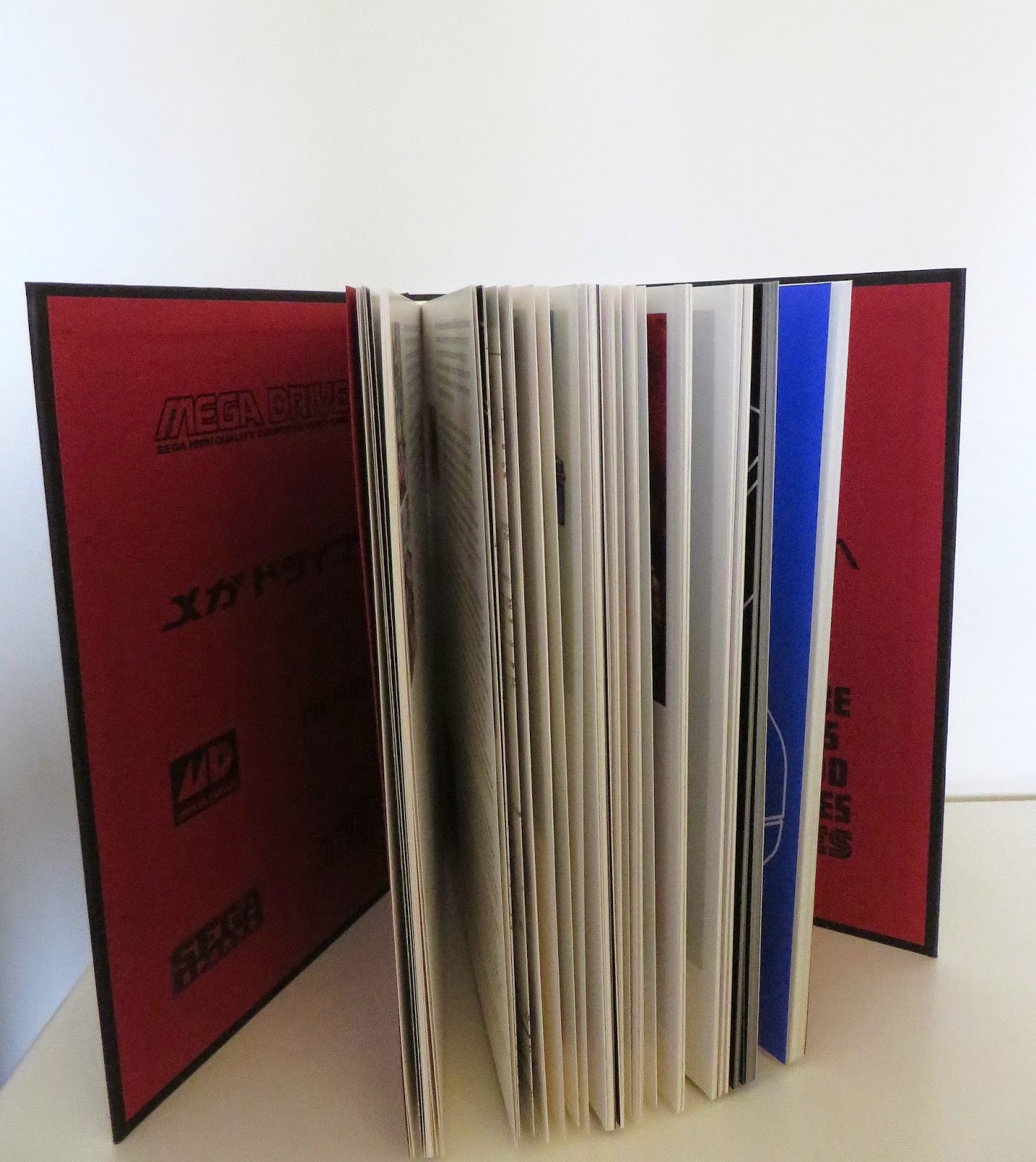
SEGA Mega Drive / Genesis: Collected Works – Review

Any great book starts with a beginning...


And here it begins where it should always start – at the birth before the start. Before the Mega Drive / Genesis came about and the advertising and the games development. Before the original hardware and then the hardware add-ons that came with it. Before the end.


This story illustrates how Sega went head to head with Nintendo when Nintendo was at the top of it’s game bringing about the ups and the downs and the story behind this epic saga of console wars. What came from this was a series of legendary titles that any gamer in their right mind should own.

Whether you are a Sega fan boy or girl it doesn't matter. The likes of Sonic 2, Streets of Rage, Golden Axe and many other games adorn this epic Sega saga. This is a global affair too – covering the Genesis in the US to the European Mega Drive, as well as the Japanese incarnation.

So this is just a written affair? Not at all. Once the story has been told by Games Journalist, Keith Stuart of the Guardian (and it doesn't drag on – just the right length for us personally with little time to spare to read these days!) we get into the visual representation of what makes the Mega Drive an icon, as well as a leading games consoles of it’s time.

This is split into key categories – some of which include:

Hardware; including development documents, schematics, a showcase of hardware released concept drawings, as well as those which remained as concepts. Even to the extent of showing product design notes for the avid fan.

Game Packaging and Character design; a massive amount of detail and artistry here. Many previously unpublished items and visual references to the wonder of Sega in the 90s.


Interviews; here we get underneath of the skin of the brand and the people who pioneered the industry at the time. From the legend of Yu Suzuki who made the arcades his own in the 80s, to Art Director Kazuyuki Hoshino – famous for his involvement with Sonic Team in the early 90s and beyond. This is an interview list that you won’t see elsewhere.


Benefactors; finishing off nicely the book thanks the gamers who made it happen….You and us here at GYL. The community who not only put their hand in their pocket to fund the book on Kickstarter. But we all helped in talking about this book during the funding period – shared it with our friends out there in the world and made it happen. We also couldn’t have done it without one man, Darren (Wall) himself of Read-Only Memory. Without Darren and his vision for the book from the concept to delivery we wouldn't have such a great legacy told in print.


The book uses the highest quality printing and reproduction to bring this all to life. Each section in the book not only uses different paper stock but different layouts to wow us.  The complete book is a solid piece indeed.

In some ways a review like this could be spoiling your own surprise factor, so we can’t go into every little detail which might do that. Like a good movie you should find out for yourself. Hopefully the images and words here tell some of that story to give you an insight without giving too much away.


Whether you lived through the early 90s and throughout to the late period of the Mega Drive - or whether you a younger gamer picking the Mega Drive up now as a retro console for the first time -  this book is going to appeal to you.

In terms of a book on the subject – we think this is the No 1 choice for anyone.

You can buy the book from Read-Only Memory – here is the link: http://readonlymemory.vg/ 


Sunday, 9 November 2014

How to set up SEGA CD / MEGA CD on the JXD

As part of the HOW TO Guides for JXD...GYL Fan and Friend Sean Tagg gave us a ten point plan to get the Sega CD/ Mega CD running 

GET 5% off a JXD at www.funstock.co.uk by using discount code: GYL 


Here goes:

1.download and install MD.EMU, then select the App.


2.Select Options / System.


3.You will need to Download the Bios files for Europe, USA and Japan if you want to play game from all regions.
Select USA Bios and then locate the path to your saved USA Bios file. Seen below [bios_CD_U.bin]. Find all 3 file paths.


4.Download a SEGA CD / MEGA CD rom.  Google search!

5. Only games with the .iso & .wav files are compatible. Click on file listing to check.


6. All good!


7. Click on the file to download then unzip the file into a folder with your game name.
Copy the folder over to your JXD game folder.\


8. Open up the MD.EMU app and select Load Game. Find your games folder and select the game.


9.Select the game ( .Cue file)


10.The game will load


Thanks,

Sean (OutRun86 Blog)

Also follow Sean on Twitter at twitter.com/sean_tagg

Monday, 13 October 2014

GamesYouLoved at Play Expo 2014 - day two

Day two update - www.playexpo.net 
Manchester - 12th October 2014


The second day of Play Expo brought more of that old-school goodness with a modern twist, more costumed shenanigans and Retro game competitions with both prizes and pride at stake.

Sunday morning at Play Expo went a lot more smoothly without car worries to hold us back. The Games You Loved team got through the doors as early as possible, quickly unveiled our stand and hit the arcades for some cheeky games before the doors opened

I greatly appreciated the chance to try Smash TV and Tatsujin – two games I’d only heard of and would never usually get the chance to play, let alone see them in an arcade cabinet where they belong. As a younger generation gamer myself, experiencing all the 80s arcade machines in all their glory was a real privilege. The only thing I’d seen like it was Funspot, the American arcade featured in the movie King of Kong so it was a bit like standing on hallowed ground.

Forgive me for being a bit biased towards shoot’em ups but I have an unhealthy love for the genre, so here we go. I was able to play a real Galaga machine for the first time ever! Seeing the solid foundation behind the games I love was very cool, Galaga has definitely aged well which is probably why the series continues to this day. The same awe from playing on a real machine hit me when I tried Sinistar as well, it’s amazing to see how an old arcade game can be as intense an experience as Sinistar is.

Hanging out beside my beloved Progear cab while waiting for a turn gave me a chance to take in the friendly atmosphere of Play Expo. Shared passion makes for easy conversation and after a couple of attempts at my mission from yesterday I finally cleared the game on a single credit, and people who’d seen my efforts were quick to approach afterwards, have a chat and ask for advice about the game.

Day 2 brought out my competitive streak, even if that meant losing to Chris from the GYL team at Kung Fu Master, something I’m sure he’ll remind me of forever!


Alongside all this was a massive walkabout with Chris and a few of the other GYL team and some cool chaps in the community. When it came to arcades from Star Wars to Outrun you could pretty much take your pick.

I spent some time challenging people at Street Fighter games on the SNES, you have to respect the amount of time and energy these guys ‘n’ gals put into learning their fighting games, some of these brawlers were seriously good. I entered 8bit Planet’s Smash Bros Melee tourney despite being a pretty average player myself. 

Just watching the physical act of pressing buttons quickly was impressive enough; the better players’ hands were just a blur of movement and the game was being played so fast that a non-initiate probably couldn’t tell what was going on. As for myself I had the rare pleasure of actually winning a couple of matches before being knocked out of the third round in some really close games. One of my opponents was so good at mind reading he could tell everything I was going to do before even I knew, impressive stuff all round.

Some more exploration led me to a new indie game for Xbox 360 and PC called Tiny Keep, which invited me to begin my ‘tiny escape’. It’s a roguelike dungeon crawler with a charmingly cartoonish visual style that doesn’t detract from the game’s dungeon setting. You progress through randomly generated floors, hacking your way through enemies or leading them into traps. Once I figured out how to control my character I found it very fun, the random element is intended to keep players coming back for a varied adventure while each level has its own distinctive theme and boss.  My escape was cut short however when I ignored warnings to leave an ominous skull totem alone, disturbed it and was mowed down by a sudden ambush of skeleton warriors. As a gamer it’s hard to avoid interacting with any given object, but I definitely learnt my lesson.

Finally I tried out a retro arcade classic born anew on the Occulus Rift: Tempest! This was my first time trying the Occulus Rift for any type of game, so allow me to state the obvious; that it’s pretty damn cool. I won’t overdo it though. Even with the frantic shooter action of Tempest and its constant explosion of trippy colours, I wasn’t freaking out or having problems with my eyes afterwards like some testers have claimed. Somehow even in this crazy cyberspace disco, being totally immersed and having full use of my peripheral vision just felt natural. After trying Tempest I do wonder how I’d be affected by an Occulus Rift game that makes use of visual realism.


By Ben Cataldo
GamesYouLoved


Friday, 1 November 2013

Evolution of an Arcade Junkie - Part one of two

By David Campbell

I was born in Scotland, in 1975. Some people may think that makes me old, but 1975 was a great year to be born. Let me explain why.

Portobello Beach Arcade - Edinburgh
Video gaming was in its infancy. There were a few primitive games out there, but the explosion of fast paced, vibrant games that made you forget where you were was still to come. Most younger people probably cannot comprehend what a magical time this was.
If you ask a teenager today what the first console game they ever played was, I would bet that the vast majority of them wouldn’t be able to tell you. 

Now, that may be because home video games are commonplace now, and part of everyday life. Back when I was a kid, however, home video games consisted of variants of Pong, generously labelled as “Sports” games. Sure, Atari and a few other companies would change all that, but arcades.. nothing could rival an arcade experience.

The sights, the sounds, the colourful images, the transition as your eyes adjusted from normal outside life to the darkened digital sanctuary, revealing the delights within. That moment where you scan the arcade, looking for your favourite game, or maybe a new game.. deciding which coin slot would earn the right to your hard earned pocket money.

I remember the first arcade game I ever played. It was at Haggerston Castle holiday park in Northumberland. On our first explorative walk around the camp site, my mum, dad and I discovered a large white building, with what appeared to be a TV sitting outside on a large box. As we approached, we noticed a steering wheel

I ran forward, curious and excited by this neon coloured delight. I deliriously pushed the pedal, rocked the wheel, moved the  gear lever up and down. My mum examined this strange beast, and did something that changed my life forever. She gave me 10p to put in the machine. It was Atari’s “Night Driver”. It was the stand up version, with a black and white screen. Rudimentary would be a generous description of the graphics, but to my four year old overloaded brain, I was there - I was in a car, racing along at breakneck speed, in the dead of night. I crashed lots. I got another 10p.. and my addiction was born.

Onto the 80s

My arcade addiction grew almost in parallel with the exponential explosion of the arcade industry after my experience with Night Driver in 1979.

We used to visit Portobello beach in Edinburgh for a treat day. I would make a beeline for the arcades, which were now plentiful. New games seemed to turn up every time I visited.

By 1983, we were in what has now become known as the “Golden Age” of the arcade.  Classics such as Asteroids and Space Invaders which people had swarmed around had grown into full colour, polyphonic coin swallowers. Pac-Man, Joust, Defender, Robotron, Galaxian, Donkey Kong, Gorf, Pole Position and Spy Hunter were the regulars in most arcades. Vast rooms filled with the sonic and visual cacophony of coins rattling, buttons being thumped, teaser sounds, laser blasts, explosions, jingles; “noise” to our parents, but a delightful symphony to my young ears. 

1983 would also be the year that created a fusion of two things that have defined me - video games and Star Wars. Atari released the seminal game of the film and allowed youngsters to fulfill their fantasies across the globe. Stepping into the large cockpit for the first time; settling on the gloss black wooden bench, hands gently cradling the flight yoke of the X-Wing... the anticipation was incredible. Putting the coin in the slot, almost in slow motion; it was sensory overload. To hear the Star Wars them pumped into the speakers, the crawling text, then BOOM! you are part of the Rebel Alliance, and you are flying an X-Wing in space. Obi Wan provides encouragement as your ship swoops and swerves, shields dropping with each TIE Fighter hit, then you nosedive straight into the Death Star trench. Get those Photon torpedoes on target, and you are rewarded with shards of the destroyed space station flying across the screen.

You emerge slowly from that cockpit, and it takes you a few seconds to realise you aren’t in space, but in an arcade. You look back at what you've just experienced. The game may only have lasted a few moments, but the smile on your face and the memories you’ve just created will last an awful lot longer.

David Campbell's story continues soon....


Saturday, 10 August 2013

Silicon Dreams - A Retrospective

Where would we be without electronics?  Using Electrical circuitry to solve problems for a variety of requirements by means of semiconductor components to control electrons, it’s such common thing that it’s mostly taken for granted, and rarely is it celebrated.

In July, GamesYouLoved were lucky enough to be invited along to the Silicon Dreams in the heart of Leicestershire, to celebrate, remember and learn about the age of electronics and hopefully understand its future. A month after the event, after all the computers, components and gadgets have been packed away or taken back to the museums from whence they came, and the dust once again settles on the diodes, we take a retrospective look at the event and what made it tick.


The event was held at Snibston Discovery Museum in Ashby, in the heart of Leicestershire.  The purpose of the event, as the name suggests; to celebrate the ‘age of the silicon chip’, and the evolution of electronic entertainment. It featured an extensive list of exhibitors; from from collectors and completionists to originators and tech-geeks, all keen to share their knowledge and let punters ask questions and interact with their exhibits. The weekend was packed with a variety of activities and talks from key speakers of the computing world. The exhibitor list read like a who’s who in British computing, featuring not one but two of UK’s computing museums; the Centre for Computing History, and Retro Computer Museum, featured talks and input from some of the scene’s most respected minds and even included entertainment from 80’s electro popsters Heaven 17. This was right up GamesYouLoved’s street.

The location couldn’t be more apt, with the event spread nicely throughout the technology museum, which itself hosts a range of science and industry exhibits. GamesYouLoved attended the event on an unusually scorching Saturday, but despite the Barbeque weather the place was a hive of activity with people of all ages enthusiastically exploring and interacting. Exhibits provided an extensive history of computing, showcasing pretty much every computer and console one could remember and many you probably wouldn’t. From the education based Commodore PET 201 (Personal Electronic Transactor) and BBC micros to countless consoles and game systems. Bits of nostalgia were dotted everywhere whisking you back to a day when electronic entertainment was still fresh and exciting, from classic synths, the first games systems (Binatone TV Master) to Betamax top-loading video players.

GamesYouLoved asked Simon Hewitt (Event Organiser) where it all started:

“The clientele that came to vintage computer festival 2 years ago, wanted a similar or follow-up event that celebrated old computers and the legacy of the silicon chip rather than just gaming. We wanted to achieve all of that and make it appeal to a family audience also.”

The next event did just that, by bringing together various factions of the computing community and guest speakers, to demonstrate what their remit was all about and share their passion to potential new audiences. "It doesn't stop there - we'll also have film-related entertainment, arts activities and - of course - electronic music.”, the website promotes.

Simon had worked hard to bring it all together, and the smooth running of the event was down to Simon and his crew’s hard work and determination.

“It’s all really exciting..” Simon enthuses, “..We’ve got a talk from Martin Ware of Heaven 17, one of the godfathers of British electronic music. We’re following this up with a live performance by a band called Northern Kind- a newer synth duo along the same lines, and rounding things off with a performance by Heaven 17. It’s a way to wind down and relax after overseeing things throughout the day as well as adding a bit of a ‘rock and roll’ element. It’s also in keeping with the retro theme of the event.”

And the Simon’s favourite game?
“We’ve had a comp running on Chuckie Egg and that was always a favourite of mine. I had an Acorn Electron and a Spectrum and I preferred the Spectrum version. I’ve even got it on my android phone!

Whilst there, GamesYouLoved GamesYouLoved spent several hours getting involved in the extensive collection of computing systems. Limited run or unsuccessful systems are a part of the evolution of the home entertainment system and GamesYouLoved always find these more interesting because they often still had a part to play in the scene as a whole. We all may remember the likes of Atari’s Jaguar or Panasonic’s 3DO - but perhaps less the French cassette based systems: Matra Alice 90 (a Tandy TRS-80 clone) or an Exelvision Exl 100, or Micronique Hector 2HR, or Philips VG5000.

Moving around the event GamesYouLoved asked the owner of these (and many more gems), Steve Perry, about his collection:

“I've brought a variety of systems along. I just think it’s important that people see them and get chance to use them. A lot of collectors keep their stuff hidden away, stored in boxes, never sharing them and I don’t really agree with that. It’s important for the scene as a whole, and I know you’ve got emulators but it can never replace the look and feel of interacting with the real thing. I’ll always prefer to play on the real thing. I suppose it’s like watching something important on television. It’s always gonna be better to watch it live than a recording.

I’ve probably got about 130 systems at the moment give or take a few non-working ones. Ive got 3 full size arcade cabinets in the living room…”

GamesYouLoved then asked Steve Perry where it all started for him?

“I guess it all started at a RetroVision event, one of the first retro gaming events. It was all quite Llamasoft based with Jeff Minter, and as a homage to his games a group of people from the YakYak forum, started this event called RetroVision and over the years it got more and more generic incorporating different games, different consoles and systems. I went to one in Oxford, took along a Playstation 2, just the one system. The next event I took a few more systems along, and then more after that and it’s just grown, and kind of got out of control.”

Back to the event...
The event was also a great way of promoting the hard work of 2 museums, who are currently playing a big part in Britain’s growing retro games scene. Centre for Computing History, and Retro Computer Museum both have extensive collections of computing and gaming systems from years gone by. Centre for Computing History is a registered charity and has only recently found a home in Haverhill near Cambridge. Their aim is to not only celebrate the impact computing has made on the way we communicate and absorb information, but to generate interest in computing and programming in the younger generations. This made them a perfect exhibitor for the event, as not only did they bring along an array of classic hardware, but they could inform and engage visitors with relevant knowledge and information.

Retro Computer Museum or RCM were also integral to the event supplying an extensive selection of home computing and gaming systems, all set-up and ‘ready to go’ allowing visitors to lose themselves completely in retro gaming if they so wished. Andy Spencer was good enough to give us a walk around and background on all the machines they’d brought from their base in Leicester. His passion and enthusiasm was infectious reminding GamesYouLoved of what gaming of old is really about. Similar to the Centre for Computing History  RCM are also a charity relying on donations and the hard work of volunteers to sustain itself.

GamesYouLoved  also spoke to  Dylan Smith, who had devised an Ethernet networking system for the Sinclair Spectrum, allowing for LAN multiplayer gaming. The theme of the event was becoming more prevalent the more involved GamesYouLoved  got. Old meets new. Sure, it’s important not to forget where computing’s come from also applying a fresh approach, simple and exciting things can occur.

GamesYouLoved also spoke to Chris Smith, writer of the book ‘The ZX Spectrum ULA: How to design a microcomputer’

He went on to say

“There’s still a barrier, especially with the younger generation, using this equipment. So what I decided to do, by way of investigating the ULA- the custom chip in the spectrum, I managed to build my own spectrum, using basic principles using common parts you can find in places like Maplin.
This celebrates how the spectrum chip works, because there’s not really any documentation for that. I then documented this into a book, documenting the whole design. This examines not just the ULA, but looks at how an 8bit computer was designed in the 80’s using the spectrum as the case-study.”

I asked whether he thought gaming had a part to play in all this. Surely gaming helped get the most out of the hardware and push things?

“In gaming, especially when you’ve got such limited resources, whether the ZX spectrum or any 8-bit machine from that era, producing games which had playability and were better than the last was key. It was all about improving and producing things that were better so things didn’t stagnate, you had to innovate.”

Chris himself used to work for the developer MicroGen and would keep an eye on the gaming scene because of its importance to the Spectrum scene;
“I used to subscribe to Crash magazine. Bearing in mind that at the time there was no internet and no ‘in your face reporting’,  I would buy the magazines to keep up with what people were doing in advancements in games. .”

And when GamesYouLoved asked about his favourite gaming memories:

“I used to play some games on the spectrum but it was more to gauge what programmers were doing. I s’pose I was more of a watcher than a player. If I was pushed though, my favourite game would be either Sabre Wulf or Nightlore. I played Sabre Wulf and awful lot. Scuba Dive (Durrell)? I loved that game. And Stop The Express.”

Since the event, The Centre for Computing History has opened its doors and Simon has confirmed there will be another Silicon Dreams event. Simon is currently looking for sponsors for the 2014 event and is providing up to date news about the progress of things via the website: 

http://www.silicondreams.org.uk/ and their Twitter page: twitter.com/SiliconDreamsGB

Thank you to everyone who help organise and contributed to the Silicon Dreams event from the GamesYouLoved Team

Find The Centre for Computing History and Retro Computer Museum on our friends page:
http://www.gamesyouloved.com/friends/