Showing posts with label 1970s. Show all posts

Saturday, 11 October 2014

GamesYouLoved at Play Expo 2014 - day one

Day one update - www.playexpo.net 
Manchester - 11th October 2014


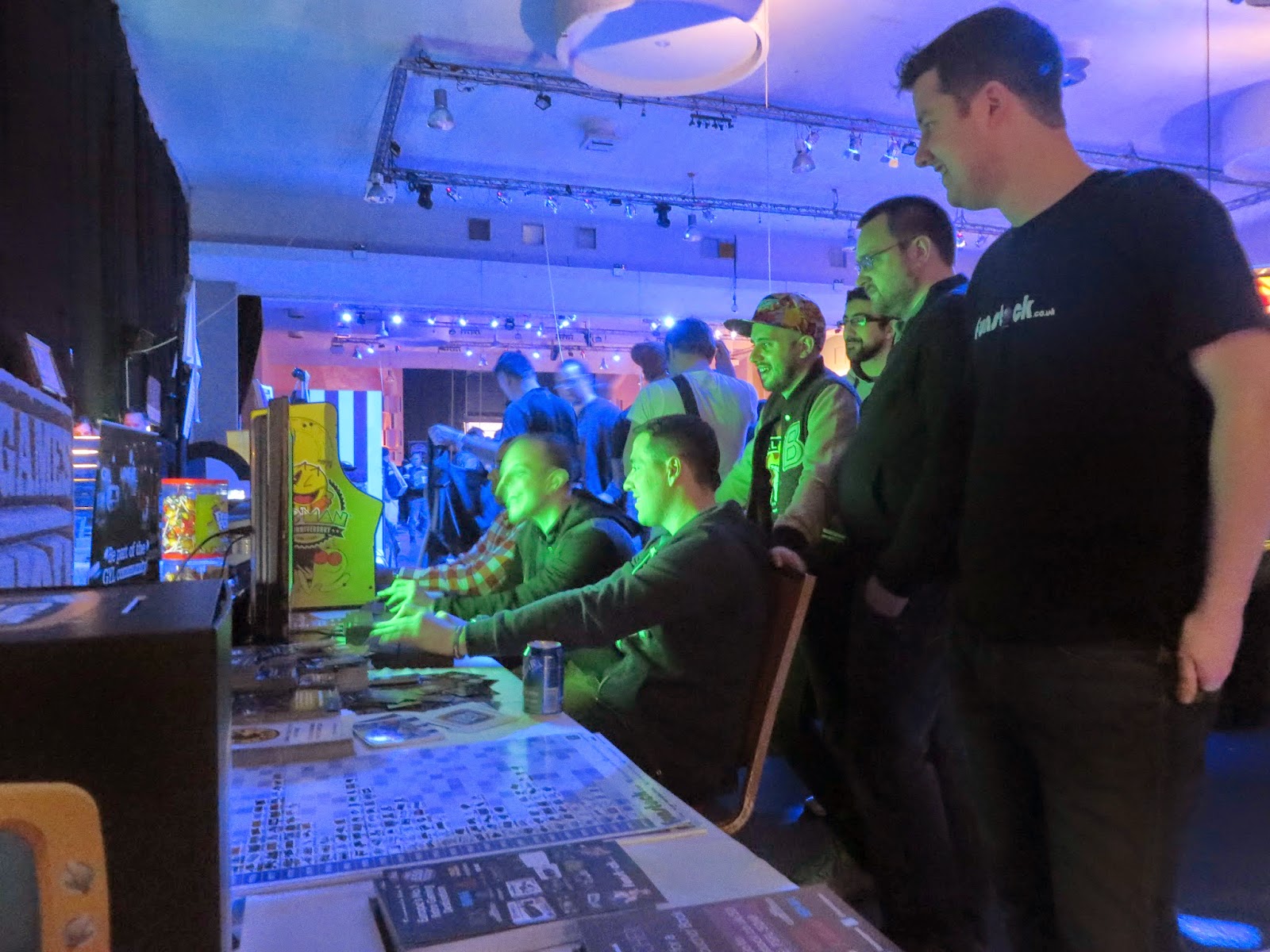
Magic. Absolute bloody magic. Whether we’re talking atmosphere, cutting edge gaming or arcane retro technology, Play Expo has it all. The team at GamesYouLoved enjoyed today so much, we really had to give you an update tonight.

We had a great time even after a fairly disastrous beginning. After cramming in a quick breakfast with the Funstock team (full English, of course), we jammed a bunch of old school consoles and equipment into the car and headed off. Immediately upon reaching the venue however, our car window refused to close, the mechanism had broken! We hadn’t even set up yet, so picture those stress levels going through the roof. Suddenly we’re in hard mode; getting the stand put together while trying to get the AA on the phone!


Fortunately everything was fixed and good to go soon after the doors opened. What struck me about Play Expo was the amount of space given over to gaming itself, almost half the venue was dedicated to games already released for people to actually play rather than obsessing over new and upcoming releases. This idea of gaming in the present and of course, the past, instead of a fixation on future gaming really speaks to me, the expo certainly lives up to its title.
 
Loads of floorspace was filled with every game under the sun, many of which were multiplayer set ups, you felt like you could start a game with anyone. There were a couple of consoles I hadn’t even heard of before, I tried an FM Towns Marty for the first time, there goes my credibility eh?

There was still a strong presence from the new console generation though, the big three were out in force.

The real hype was radiating from the arcade section: an absolutely mindblowing collection of cabinets, shoot’em ups, racing games, all that good stuff set to free play so you could game as much as you want. Personally the chance to play some real shooters by CAVE on an actual arcade cab was just awesome. With all the score competitions going on there were opportunities for all that bedroom practice to be seen by fellow gamers who genuinely appreciate it too. I’ve got a score to settle with Typing of the Dead tomorrow, that’s for sure.


It was all about playing the games, but also the retro community that surrounds us all. Retro Joe, Tooty UK (Stuart), Rich King Retro, Cybersnake (Jason), Dave 'imagamegeek' to name but a few where there. The GamesYouLoved crew and these guys and others took time out to chat and do some mutual filming too. All in a days work for these massive retrogaming fans. Not only this but we hooked up with Sam (@MrSidC64) to chat about his Commodore book on the www.funstock.co.uk stand - where we fitted in a short interview of this and his new Amiga Kickstarter which begins Monday 13th October.

A little walk through the venue presented me with crazy cosplay karaoke competitions going on in one corner next to a casual Smash Bros tourney run by the Bristol boys who’d come up for the weekend. Alongside this Retro Collect had their many competitions on and kept the energy up all day - great job guys.


There were enough stands selling retro games, quality prints and other merchandise to make me believe my wallet had a mind of its own. There was even a bloke selling swords, but thankfully the cosplayers weren’t all armed to the teeth.

So the end of the day found me back on an arcade cab playing Progear, just dying to finish my credit (it was a good run!) while being asked repeatedly by security to finish up as it was closing time. Eventually I had to relent and abandon my plane to its fate. See you all tomorrow though yeah?

By Ben Cataldo

GamesYouLoved


Friday, 4 July 2014

Grandmother buys old building in Japan, finds 55 classic arcade cabinets

Grandmother buys old building in Japan, finds 55 classic arcade cabinets

If you wanted to experience arcade games any time over the last forty years then you had to visit the Far East!. The game centers are still there lit up with neon lights all very attractive and Blade Runner like! But you have to go back 20 years to see them at their prime. Now one very lucky arcade fan is experiencing just that right now due to a surprise purchase by his girlfriend’s grandmother.
The grandmother agreed to purchase an old building in Chiba, which is just outside of Tokyo. When they arrived to check out their  building they found out that the first two floors used to be a game center in the 1980's!!. Whoever ran the arcade back then left all the cabs behind when it closed, and it is full of classic and now highly sort after games!
In total there are 55 arcade cabinets, most of which are the upright Aero Cities cabs, but it’s the game boards that they contain that’s the most exciting discovery. The list of game includes the following:
  • Columns
  • Donkey Kong
  • Galaxian
  • Magical Tetris Challenge
  • Metal Slug X
  • Pengo
  • Raiden 2
  • Super Puzzle Fighters 2 X
  • Street Fighter 2 Championship Edition
  • Street Fighter Alpha 2 (Zero 2)
  • Street Fighter EX 2
There’s sure to be more games discovered as not all of the cabinets are in working order, with monitor damage being the main fault but whatever they find, this lucky gamer has just cashed in his extra credit!!

Tuesday, 6 May 2014

Play Blackpool 2014, Sponsored by www.funstock.co.uk - Replay Events

Replaying at Replay

This weekend saw two important things happening - Star Wars day (May the fourth be with you!) - and the return of Replay to Blackpool


Turning up at the Norbreck Castle Hotel felt like returning to an old friends house. There was a welcomed sense of familiarity.

Walking through the corridors to get to the main hall, there were a few stalls to whet the appetite - Retro Hardware showing off the incredible BBC restorations they do, and AmigaKit touting their Amiga wares. We finally got to see an AmigaOne X1000,  and wanted one immediately. The bank balance however decided otherwise. We left the bright lights of the corridor to the promising darkness of the gaming hall. It sounded loud - always a good start.

The GYL and Funstock stand welcomed people into the arena where they got to play on the Neo Geo X console – a pacman arcade machine with the chance to play and chat to the people around the stand. The arcade section was huge – masses of cabinets all glimmering with their attract screens all supplied through the guys at Retro Games Party. The layout of the arcade perfect - you could easily move around or stop to admire a players skills without causing a bottleneck.


All the classics were there - Defender,  Robotron,  Battlezone,  Out Run,  Daytona,  After Burner.. the list goes on and on! Kudos to Retro Games Party who supplied the cabinets - over the weekend I only saw 3 machines out of commission. Great job,  guys!, Moving away from the arcade section,  there was table upon table of retro consoles and computers,  all with a small section of games to play on them. It was quite interesting to see the mix of old and young gamers. 


We saw one Dad showing his daughter (she looked maybe 2 or 3) how to play on old Pong game. He was twisting the knob to control the bat,  and the little girl was waving the controller in front of the screen like the Wii. Amazing to see how natural motion controls are to kids these days. its almost expected. Very endearing to see dads playing the old games with their kids though. Console Passion had a large stall next to the indie gaming zone, and there were two Oculus Rift demo stations set up - one with Jeff Minter and Llamasoft, the other with Project Games' Adam Sawkins. As the queues quietened down at the end of Saturday,  Adam was kind enough to let me play with some other demos he had been working on - I was really impressed by the tech and how immersive it is.

The side halls had LAN gaming set up,  and one of the side rooms hosted the card and tabletop gamers., From the main hall you walked through the "Games that Weren't' section, showcasing some games over many systems that never made it to commercial release. 


This corridor took you to the trader zone. It was always very busy, and you could buy almost anything, from cupcakes and radio controller drone-copters, to retro games on every format imaginable and posters, mouse mats and artwork. Some of the stalls you would recognise if you are an ebay addict - Rockrabilia, The Attic Bug etc, and some names that you'll know - Retro GT, RetroLords, ABeadsCStart.

Overall, the event was great - constantly moving, plenty to do and see (and buy!).

Replay Events did a great job of putting this on – we’re all looking forward to the next one!


Thursday, 20 March 2014

So You Wanna Be An Arcade Gamer?!

Emulation's What You Need 
By David Campbell


Emulation. Love it or loathe it, it is a means to an end for many a gamer.
Be it due to cost of collecting the real systems and associated paraphernalia, or be it due to restricted space, emulation is the gateway drug to a full on retro gaming habit.

Getting access to emulators for almost any retro system is a mere Google away, and once you find the rom images of your favourite game, the floodgates open.

"Oh, man, I remember that one.. and that- I used to love that one too!" is how it starts. 

Before you know it, there are external hard drives filled with every system imaginable and complete rom sets of every game, even the ones you've never heard of!

This has never been truer than in the case of MAME.

All of a sudden, these hulking machines that you loved as a kid, and never dreamed you could own - are now available to you, and are only a couple of mouse clicks away.

Getting MAME up and running is a pretty simple affair. and in no time at all, you are playing through some of your favourite games, and for a while it feels great.

But them you realise, it just doesn't feel right.

Arcade games were never played sitting in front of a keyboard. Hitting a key numerous times to fill the game with credits is not satisfying.

This unlocks something in you, and you start down one of three paths.

One - if you have the space (and the money), you might buy a couple of real arcade games. This will soon multiply and your house will soon be overrun with a multitude of cabs.

Two - you see about getting a MAME cabinet. You might save and buy a MAME cabinet from someone, maybe even buy a custom built one.

Three - and this is the most satisfying - you design and build your own MAME cabinet.

I went for the third option.

Framing Supports
Now, I realise not everyone has the skill, tools, or time to build their own cabinet. Let me start off by saying that I'm no carpenter - I can cut a pretty straight line and I'm good with wood filler :)

I spent about 6 months researching and designing my cabinet. Its not something you can do in a weekend. There are a few stages to it (if you want to do it properly), and I'd like to share my experience with y'all, in case it helps you in some way.

The first thing I did was decide on the type of cabinet I'd build. I grew up in the "golden age" of arcades, and as such I wanted my cabinet to have a traditional, old school feel to it. I wanted it to have a proper coin mechanism too, and I knew I wanted a classic style coin mech (more on that later).

Take a look at Jakobuds website (http://www.jakobud.com/plan-list.php) for some inspiration. I settled on a customised Taito style cabinet, reminiscent of most of the games from the early 80’s. You may be slightly younger, and your memories will be of Street Fighter II, Mortal Kombat, Virtua Fighter and the like. It really is up to you.

Once I knew the look of the cabinet I wanted, I started on the the part of the design that took the longest - the control panel.

Taking Shape
The only real trouble with a MAME cabinet is that it plays virtually all the arcade games you can think of. That might not sound like much of a burden, but arcade games had a plethora of unique controls to try and prise your pocket money from your sweaty palms. 

Here's just a  starter list of control types:
- Joysticks
- Trackballs
- Light Guns
- Spinners
- Rotary Sticks
- Steering Wheels
- Flight Yokes
- Twin Sticks
.. and there are a lot more besides this.

You can’t have all controls on your panel (and please don't try!), so I would recommend making a list of games you absolutely want to have in your cabinet.

List the control styles (you can check somewhere like the Arcade Museum if your memory is a little hazy - http://www.arcade-museum.com/) for each style of game, and decide what you can fit on your panel.

Control Panel Test
After much deliberation, I decided that I'd have a one player control panel, as it would only be me playing it 90% of the time. This comprises an 8 way joystick, and six buttons (more than enough to play Street Fighter etc). I knew I wanted a Trackball as I love Missile Command and Rampart. I added a second 8 way stick - not for a second player, but for games such as Smash TV, Karate Champ and Robotron.

For the icing on the cake, I also put two buttons on the side of the cabinet, which are flipper buttons for virtual pinball.

One other thing I decided on was that I wanted to be able to swap control panels, if I ever decided to make more specialist panels (driving or Ikari style, for example).

You also need to consider the monitor for your cabinet.

Purists will want a CRT, but these are hard to come by, large, and mey need repairing at some point. I put a 19" 4:3 (i.e. "square") monitor in mine, as most of the games were not widescreen back in the day.

At this point it may be worth mentioning that I use a PC to power my arcade cabinet.

However, throughout the design phase, and right up to the very end, I actualy designed the cab to run from an Xbox, Dreamcast and Playstation 2, using retail compilation discs. This allowed me to play 99% of the games I wanted to to, including light gun games (which generally need a CRT TV).

Paint it black
However, I opted for the PC in the end as it let me play 100% of the games I wanted, and then some!

There are pros and cons to the games console vs PC - its really a matter of personal choice for you.

Now, to interface real arcade controls with your computer (or console), I whole heartedly recommend what I consider to be the best interface on the market - the KADE (http://kadevice.com/). I've bought four of these beauties for various projects. They are inexpensive, straightforward to wire, and are customisable - they are USB powered, so easy to install!

Once you have your design, and I really would urge you to spend a lot of time on the design - no point building a cabinet that you don’t like or wish you had done differently- its time to actually build it.

There are many options and opinions on the best materials to use to build a cabinet. I opted for 25mm MDF for mine. Some people may be horrified at this, but its easy to work with, durable, and can take a battering!

It took me a week from start to “finish” to create my cabinet. You’ll need at a bare minimum the following tools:
  • Circular Saw
  • Jig Saw
  • Drill
  • Screwdriver
  • Hole Saw

Beta Testing
Take your time cutting the panels. Its easier to take a bit longer with no mistakes than to rush and have to fix a mistake!

Once all your panels are cut, Take the time to ensure that the base and sides are square. If they’re off at all, your cabinet will wobble and the control panel won’t fit properly.

Like I’ve said before - take your time!

Once all the parts are assembled, you need to paint it. This will take the longest time because you need to allow the paint to dry (obviously!), but you also need to do many coats to get a good finish.

I sanded the whole cabinet then wiped down with white spirit prior to priming to ensure the best surface possible.

Prime the whole cabinet with MDF primer. Don’t skip this step or scrimp by using cheap primer - MDF is like a sponge and will absorb paint, so primer it with proper primer to seal the pores and give you a good foundation.

Once your first coat of primer is dry, lightly sand it back with a medium grade sandpaper. This will allow your second coat of primer to fill any minuscule bumps (which look huge once painted!) and give you a nice finish. Wipe down the whole thing with a damp cloth and allow to dry before applying the second coat.

For me, two coats of primer was a good base. I painted my cabinet gloss black - obviously you can paint yours in any way you like. The process of painting was the same as the primer - paint, sand, wipe, paint.

I used a mini foam roller to paint my cabinet. Some people prefer brushes, but the roller gave my cabinet a nice texture that I liked - some people might not like that and prefer a totally smooth finish.

These decisions are the benefits of building your own cabinet!

Here’s a quick overall list of materials I used in my cabinet:
  • Three 8’x6’ sheets of 25mm MDF
  • one 750ml pot MDF primer
  • one 750ml pot black one coat gloss
  • one 36x36” sheet MDF for monitor cover and marquee

Hopefully this gives you an overview of building your cabinet.

There are many great resources out there, and here are a few that helped me immensely:


Have fun, and if you’ve any questions, get in touch and I’ll try to help!

Guest BLOG by GYL Fan - David Campbell

Friday, 7 February 2014

GYL Visits the Centre for Computing History

Here at GamesYouLoved we can’t get enough of all things retro...Games, toys, gadgets – we love nothing more than revisiting the past and firing up those memories that we had all but forgotten! 


Needless to say, when we were invited up to Cambridge to visit the Centre for Computing History we could not believe our luck! So, on a glorious Saturday morning the GamesYouLoved team hopped into our Deloreon (we wish!) and took a journey back to the future...

The Centre for Computing History is a computer museum that ‘tells the story of the Information Age’. It explores the historical, social and cultural impacts of personal computing by looking at the hardware and software that has made an imprint on our lives. Registered as a charity, it is backed by Google, Microsoft and the Open University (amongst others), and hopes to educate a new generation who know very little about the history of computing.

The first thing you will notice walking into the museum is a wealth of computer hardware spanning all the way back to 1958. From Commodore to Sinclair -  Apple to Amstrad, there is an astonishing collection of computer hardware to play with and explore, some of which you will recognise, some you will not. What was most striking about having different generations of computers in one place is how they have evolved over time. Physical design, software and function have all been transformed by technological capability and consumer demand, and it leaves one wondering where computers will go next...

In this modern age of laptops, phones and tablets it’s easy to forget that in the past computers were uncommon for consumers. The first personal computers were unwieldy and lacking in function, and it’s fair to say that these early machines were received with scepticism by the public (not least due to their excessive price!). Many would argue that it wasn’t until the dawn of the games console that computers truly excited consumers – they opened up new realms of interactivity and were a platform for creativity and storytelling. 


The museum pays full attention to this viewpoint by including an impressive collection of games consoles for visitors to play. With a roster that spans all the way from Pong to the PS2, you are able to see how consoles and games have evolved.  One minute we were thrashing it out on Tekken 1, the next we were putting our reflexes to the test with Sonic. There are also 3 arcade cabs to check out, which perfectly demonstrate the sheer variety of computing hardware.


The museum often plays host to events, and we were lucky enough to attend during a Super Smash Bros tournament (check out our review of Super Smash Bros 64 
http://www.gamesyouloved.com/game-genre/consoles/nintendo/nintendo-n64/super-smash-bros/  

As the first event of its kind at the venue, there was a little uncertainty about what the turnout would be, but these concerns were swiftly put to bed as over 60 of the country’s best Smash players filtered in, carrying with them N64s, Gamecubes and Wiis on which to do battle.


Overall we were incredibly impressed with the museum. With its astonishing collection of computer and gaming hardware there is so much to see and do. For adults and children alike, there is so much to discover at the Centre for Computing History. 

Visit their website to check out more -http://www.computinghistory.org.uk/

Tuesday, 14 January 2014

A Life of Gaming - Mike Rouse - Lift London

A Life of Gaming
by Mike Rouse - Studio Director at Lift London - Microsoft

1982, the first CD is sold in Japan, the first colour pictures of Venus are sent back from Vanera 13 and Time Magazine name THE COMPUTER as the man of the year. Gadgets and gizmos are starting to become common place, VHS players, Walkman, IBM PC, tape recorders, big CRT colour TVs and the video gaming revolution is in full flow. My dad has quit his job at IBM in the UK as a programmer and has moved to South Africa to work for AngloAmerica. He’s in his late 20’s and is the original gadget collector. He’s also a casual gamer, playing ASCII pinball on his IBM and an old console that had a PING PONG (Magnavox Odyssey). 

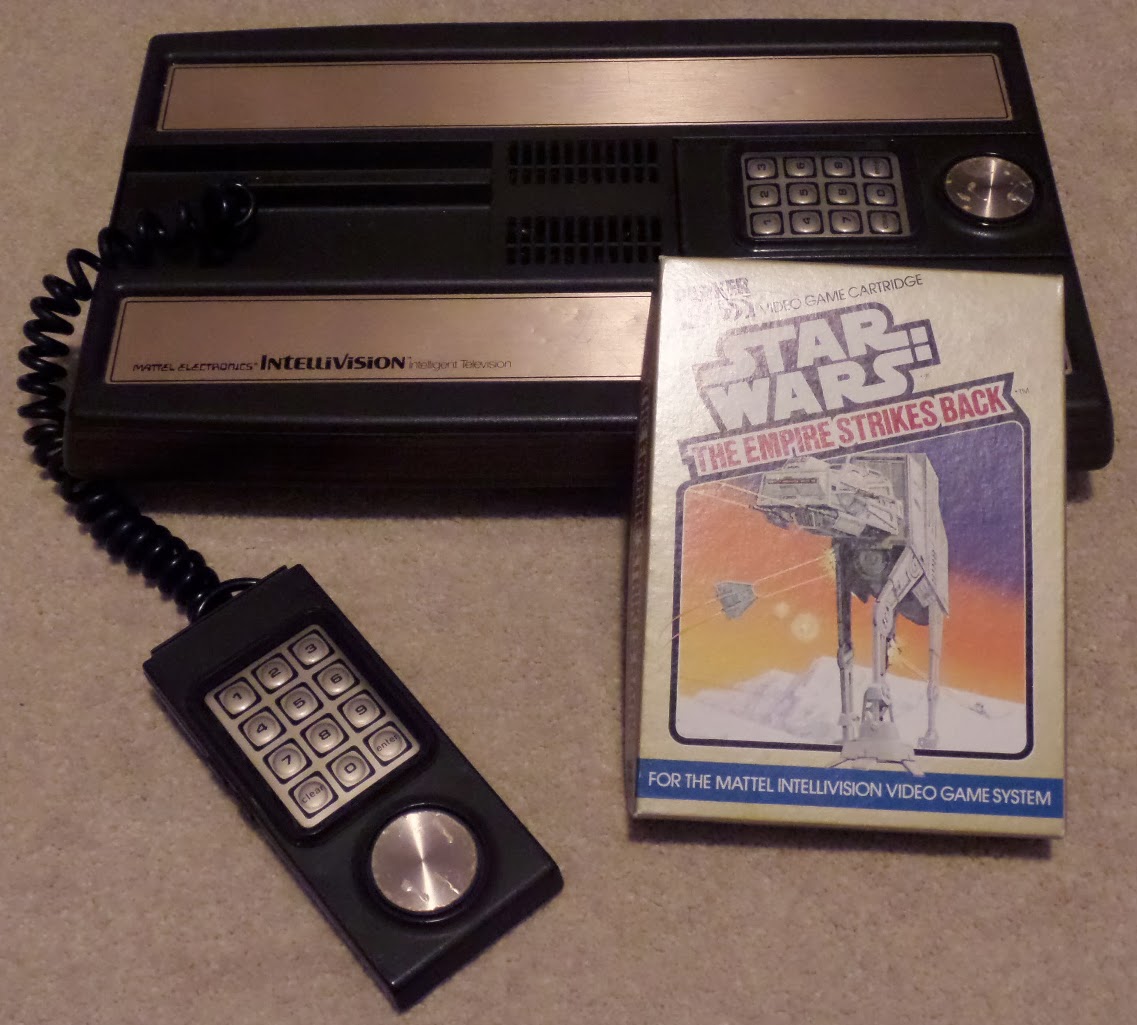
I’m five and although I play on both the IBM and Odyssey from time to time I’m not really into games,  I live in a warm country so I’m out and about on my BMX and playing with my younger brother and my friends. But its 1982, the year EA, Ultimate Play the Game (Rare) and MicroProse are formed. This is the year when Shigeru Miyamoto’s Donkey Kong Jr. is released, Q*Bert, Ms. Pac-Man, Dig Dug, Utopia (the first sim game), Joust, Robotron: 2084, Tron Arcade (released before the film), Pole Position, Zaxxon, Xevious and the fabled E.T the Extra-Terrestrial (one of the biggest failures in the history of video games) are released to gaming audiences at home and in the arcades. It’s also the year when one of the biggest film licenses in the world has its first game release, Star Wars: The Empire Strikes Back on the Intellivision and Atari 2600.

This was a must have game for my dad, so not long after the games release my dad brought home a brand new Intellivision and a copy of Star Wars. This console and game changed everything for me. The graphics were amazing and so was the sound, the console was so easy and convenient to use and it was cartridge based. Over the next five years our game collection grew, and I played as often as I was allowed to. I loved playing B-17 Bomber with the Intellivoice, Night Stalker and Lock ‘N Chase as well as a host of other games. The Intellivision formed the majority of my gaming experiences, until sometime in 1987 when our local shopping store got in 2 arcade machines. One I think was Pac-Man the other was Double Dragon. I can remember going every day after school to the store to play Double Dragon. I was hooked, consoles no longer held any appeal, I started to hang-out at the arcades and spent all my pocket money on arcade machines. I played a ton of games in the arcades and have so many favorites, allot from the 90s. One that kept me in the arcade for hours was Street Fighter II it was also the game that brought me back to consoles.

I moved back to the UK when I was 12 in 1989, still getting the majority of my gaming from the arcades. I had the NES and Master System by this point, both had great games but there was still nothing like what I could get in the arcades. Then in early 1994 I got a copy of Street Fighter II: Champion Edition for my Megadrive. Here was a game that was able to replicate my arcade experiences with the added convenience of it being in my house. I had fallen in love with consoles again. As I started to replace visits to the arcades with more hours on consoles I began looking for new and better experiences across multiple platforms and this was the beginning of my games collection.

I have a modest collection which could have been quite alot bigger if I did not sell a large portion of it in 1999 to pay for food and maybe a little drink while at University. I always kick myself as I think back to the games and consoles I sold during that period. Snatcher, Suikoden, Panasonic 3DO and all the games, original Game Boy, 100+ boxed SNES games and the list goes on. It used to be that trying to buy back these lost treasures was restricted to Ebay and a very few online retailers, but there seems to be a renaissance in classic and retro gaming. Similar to vinyl records which have seen their highest sales this year since 1997, the popularity and the distribution channels for classic and retro gaming are growing. A small number of boutique stores have sprung up and dedicated online specialists have started to appear. I love browsing through a store’s inventory of old SNES games and online specialist offer the choice and subject expertise that Ebay can’t. The revival of these bricks & mortor and online specialists have become a great source for my gaming collection.

My collection currently consists of 784 complete boxed games, 310 digital games on PSN, Live, and Steam, iOS, Nintendo eShop and Windows. I have a custom built MAME cab with coin-op, custom art work, Sanwa Bat top sticks, Ultralux lit buttons, 2.1 speakers and custom lit marquee. There’s probably a couple of thousand games on there, allot them obscure Japanese beat ‘em ups. I also have 44 consoles, everything from a 2600 to a Vectrex to a Mega CD mk1 (my favourite console) and nearly every major console released from 1990 to the very latest next gen. I have a ton of peripherals and special edition peripherals like the JogCon which came with the Ridge Racer Type 4. And I have allot gaming paraphernalia and merchandise. The collection is steadily growing, every week I get something new. Just this week I bought Rings of Power for the Megadrive. This game was Naughty Dogs first console game. My passion for gaming goes beyond my collection and my hobby, it is also my Job. I’ve been creating games for 14 years now starting off as a junior 3D artist and now as a studio director. I’ve worked for both Sony and Microsoft. Working in the games industry has allowed me build a truly unique games collection.

My collection does have the same games as most other game collections, some rarer than others but I also have truly unique games and paraphernalia. Working in games has allowed me to meet and work with my heroes. I’ve had the opportunity to meet and demo my game to
Shigeru Miyamoto who has signed my 1st run copy of The legend of Zelda for the NES. I’ve worked with and discussed the finer points of games design with Keiji Inafune co-creator of Rockman (Megaman in the west). Inafune-san was also kind enough to sign a custom piece of artwork from one of his games. I have a ton of signed games from colleagues that have worked on some classic games. Friends have donated games that were never released, some are sequels or spin offs from some of the biggest franchises in gaming history. There are the games I’ve made, TIF, The Getaway, Black Monday, Singstar, Dancestar, Wonderbook all signed by the teams and a ton of promotional and unique merchandise to go along with them. There are gold and platinum plaques for those that sold millions of copies. I co-created PlayStation Home and on the launch of the social gaming service we commissioned a special artwork plaque created by Michael Place. Michael is one of my favorite artists, I became a fan after seeing his artwork in the original WipEout on PlayStation. There are limited edition press packs, toys and figures that will never be released. I’ve not only collected but have been part of gaming history. In 2007 at E3 Sony hosted for the first time ever their conference in a virtual world, PlayStation Home. I was behind the stage with 9 massive PS3 dev kits controlling and directing the virtual show live. It was also fantastic seeing the PlayStation trophy system go live on every PS3 in the world, having created the high level direction. And now my studio is about to make gaming history again, with an original and new universe of characters and stories.


There are people I know that don’t share and don’t understand my love for games. These people won’t know the great nostalgic feeling you get from playing classic and retro games, the complete immersion of new worlds and stories games give us. Our game collections contain some of the most compelling stories every written, the most emotional music ever composed, the most thought provoking artwork ever created and amazing universes for us to visit and play in. 

As we study our anthropology there is no doubt in my mind that gaming is now a part of this. It is ingrained in popular modern culture and as it goes in popularity so will those that want to capture its past.  

A Guest Blog Review by Mike Rouse
Studio Director - Lift London
www.liftlondon.com/